• Mahashivratree: The grand night of Shiva

    It has been a dream since 2019 to attend the Maha Shivratree at Isha Yoga Center in Coimbatore. 

    My desire to visit the ashram kept growing and finally I visited the yoga center in 2024 for my 40th birthday ( a gift to myself as my birthday was on Ekadashi). 

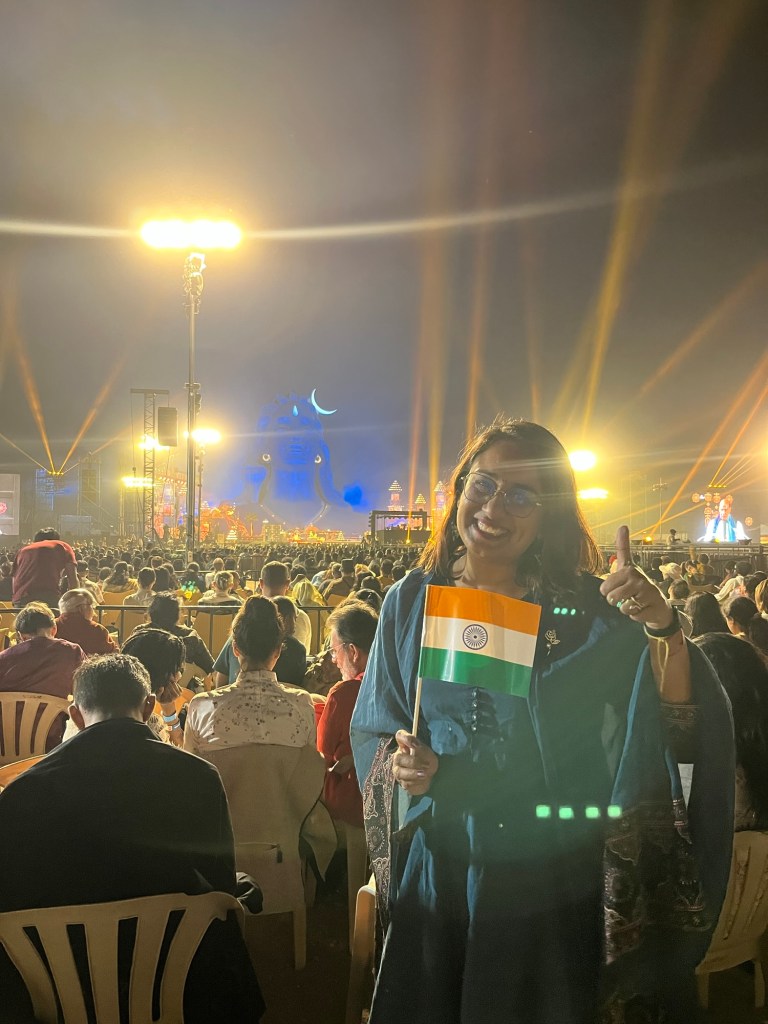
    The wish to attend Mahashivratree was still there and two years later, there I was among the crowd of thousands of people.
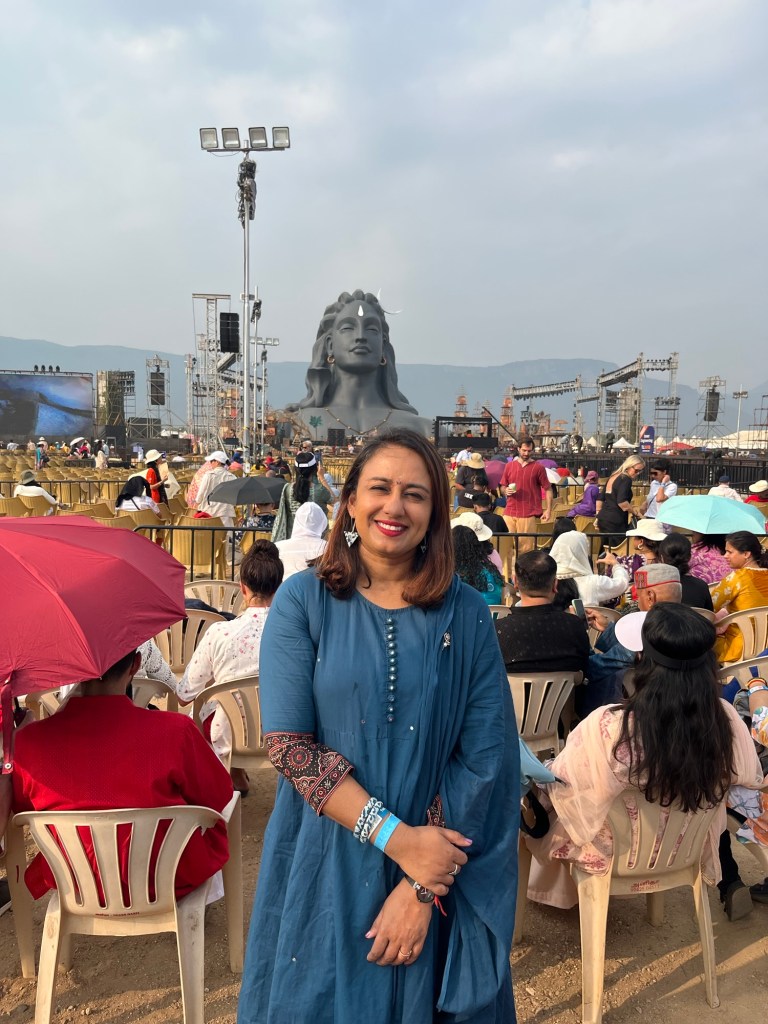
    The event is so well organised that you do not feel the crowd or feel unsafe. Volunteers are around everywhere, always with a smile and offering guidance when needed.

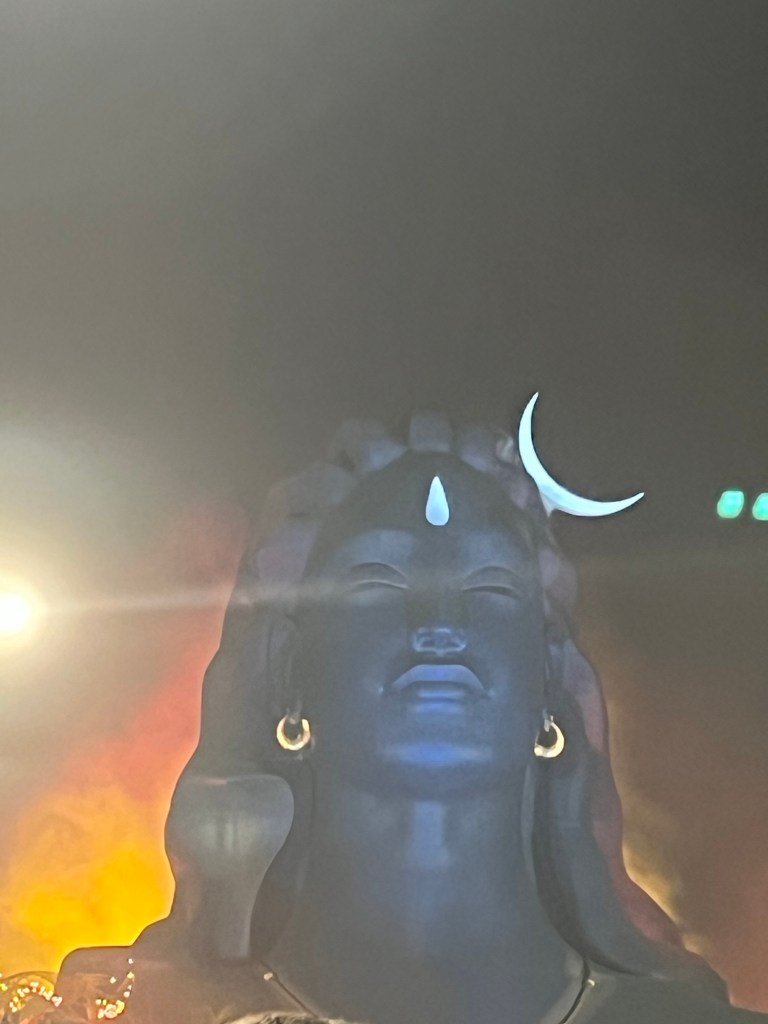
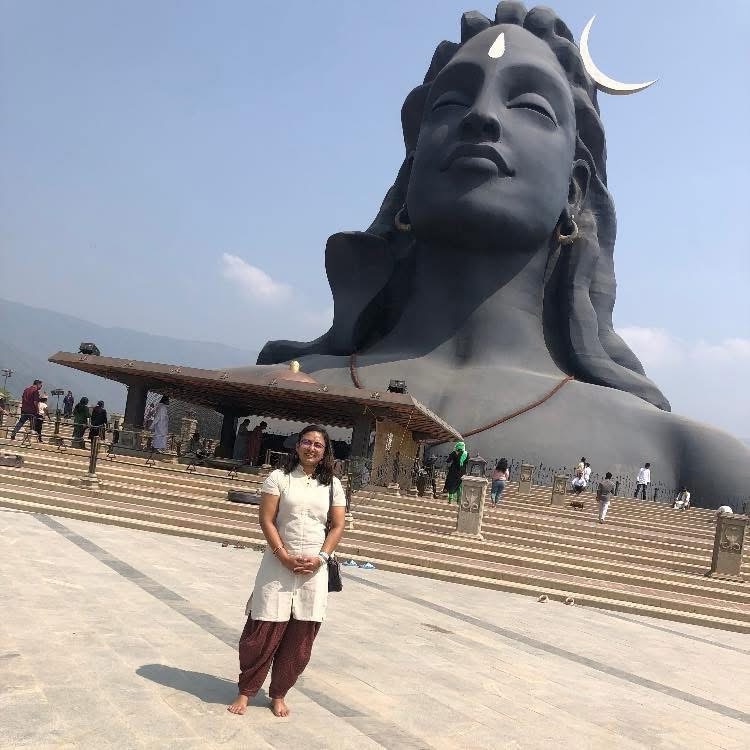
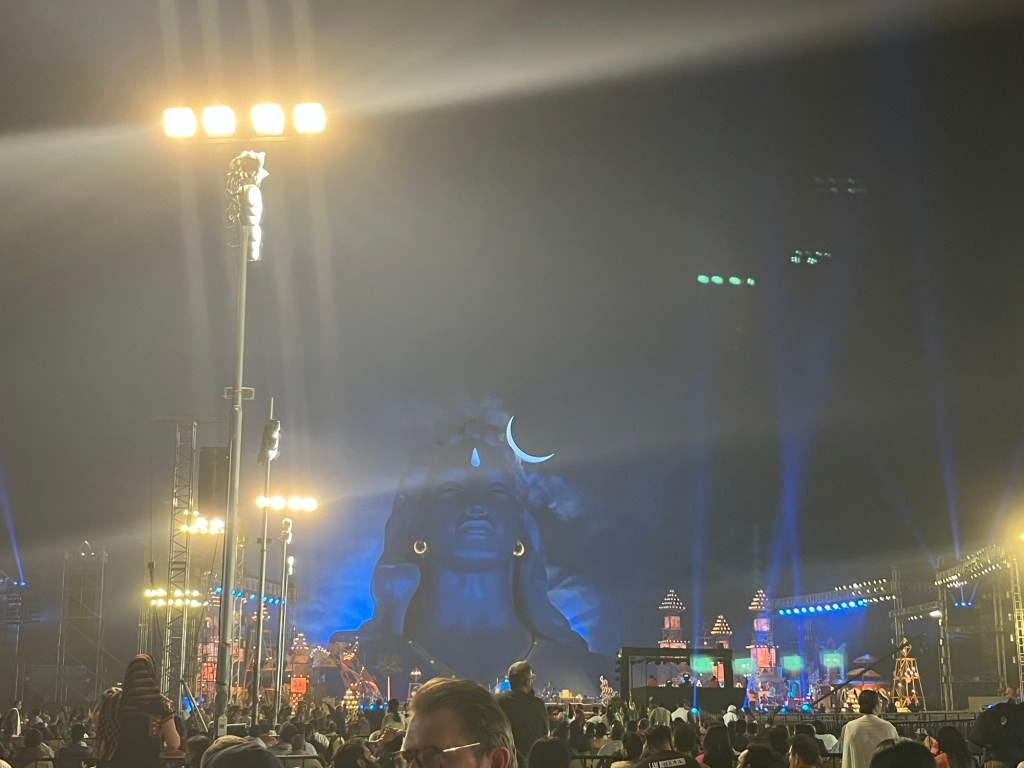
    On the grand day, we woke up at 3 30 am, attended guru pooja, did our yoga practice, and Shivanga Sadhana culmination ritual. At 15 30 we left our accommodation and walked to the 112 feet Adiyogi statue. All the arrangements were already made and we sat in our respective bays, waiting for the event to start at 6 pm. 

    In yogic culture, Shiva is known as both the first yogi and guru – Adiyogi/Adiguru. He has transmitted the knowledge of yoga to the seven sages ( saptarishis) who in turn shared the science of yoga around the world.
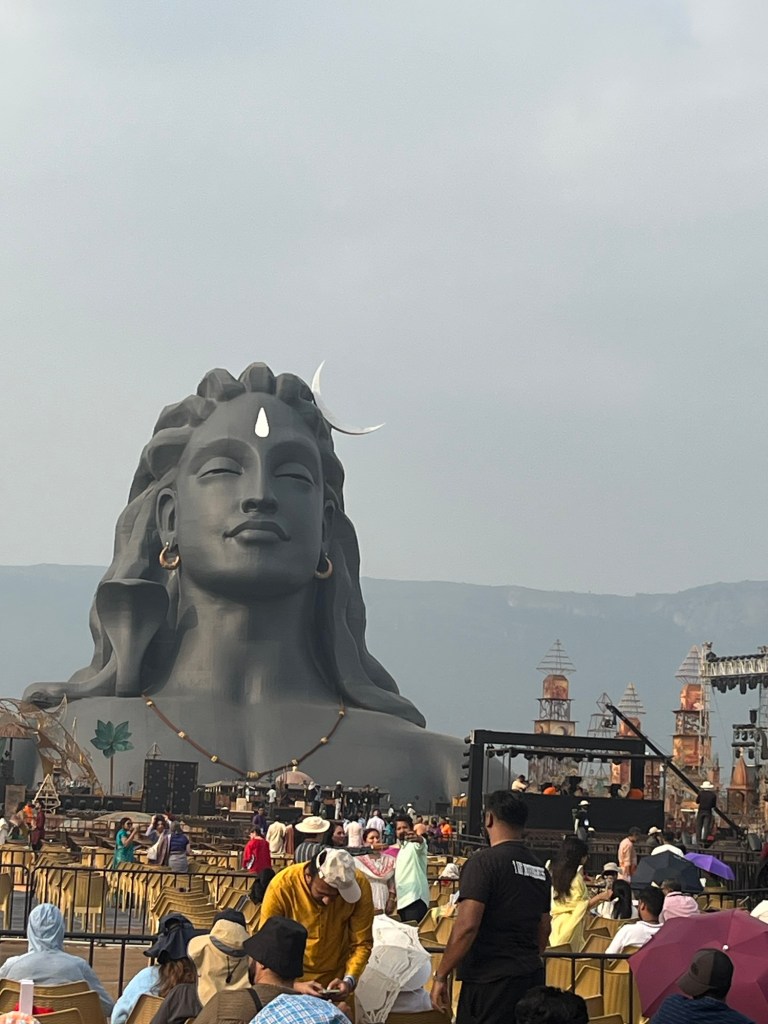
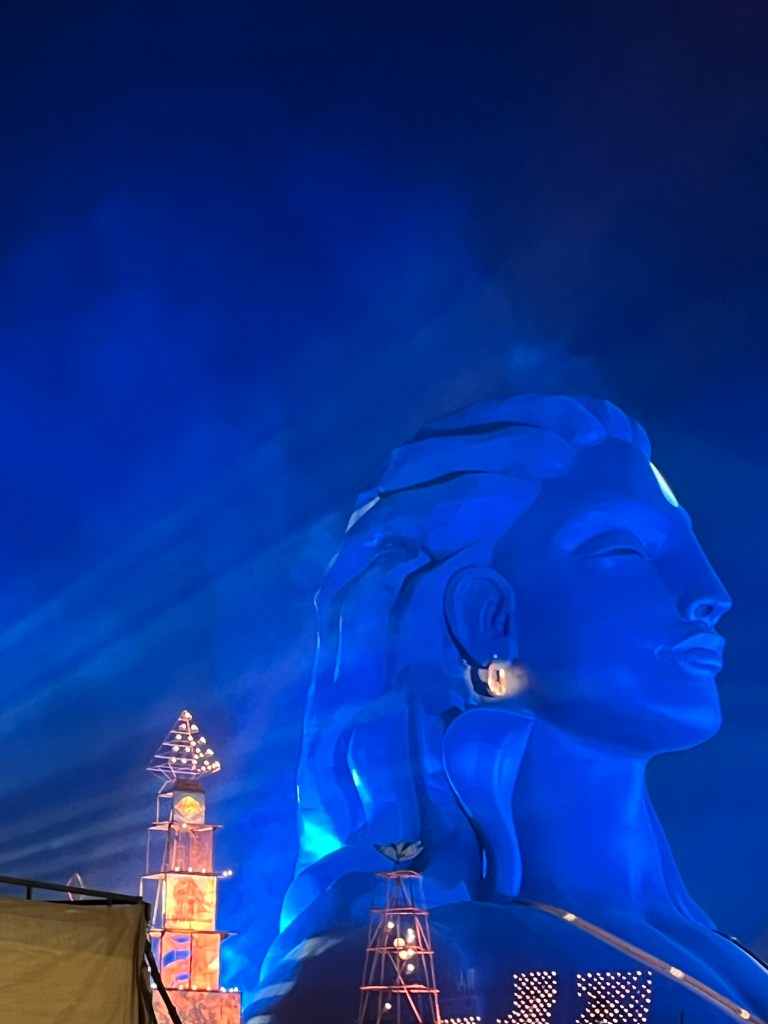
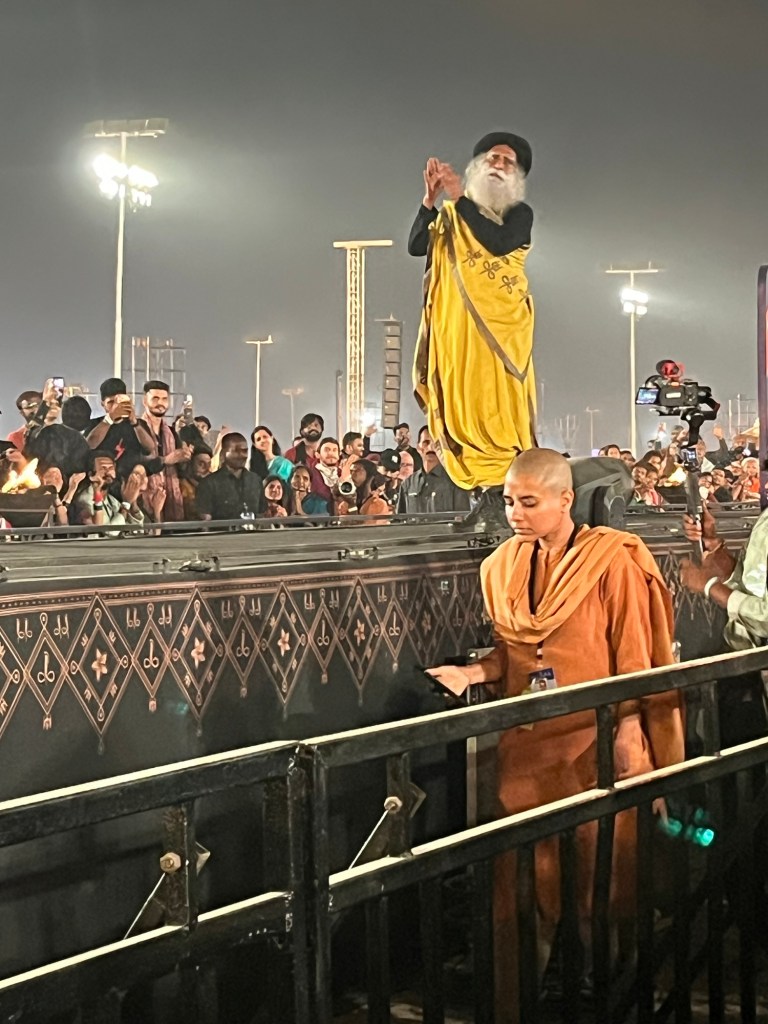
    It was a dream come true to see Sadhguru in person and listen to Sounds of Isha playing live. Seeing Sadhguru in front of me filled me with calmness and I just wanted that feeling to stay with me. I did not even feel like using my phone and just wanted to gaze at Sadhguru. 
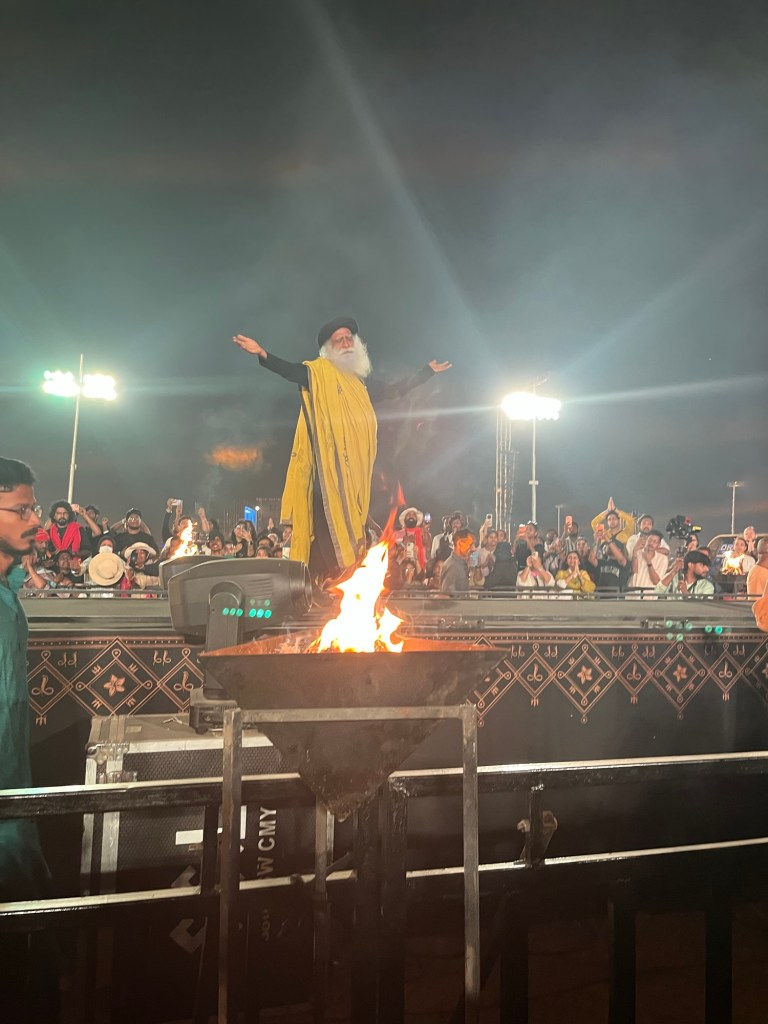
    Sadhguru’s vibes

    By the time we did the meditations, I was feeling very sleepy but told myself I did not come all the way here to sleep! As there is an upsurge of energy on that day, we should keep our spine erect and not sleep. 

    To stay awake, we danced, sang and my heart was filled with joy! My feet were not tired nor did I feel sleepy after midnight. We danced until the show ended at 6 a.m.

    We walked back to the ashram and went for abhishekam at Dhyanalinga. This was a rare opportunity to be able to go up the ladder and pour milk on the shivling. 

    This special place always makes me feel blessed and I was so grateful to the universe for this wonderful experience.
    P.S You can watch the full celebrations on YouTube:
  • In the grace of yoga

    I am now back in Mauritius, reminiscing about my 10 days spent in India. I had intermittent access to internet and did not have much time to use my phone as my schedule was full.

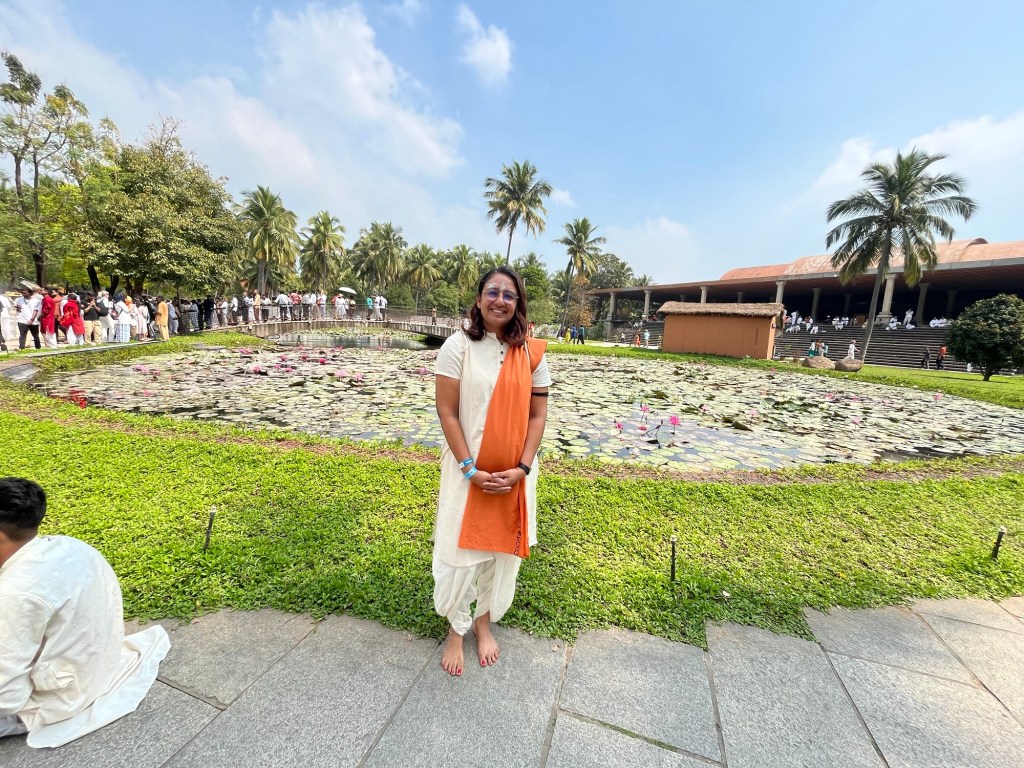
    The “Grace of yoga” programme at Isha Yoga Center was packed with various activities: yoga, meditation, watching documentaries, rituals, singing and dancing. 

    I started my three day Shivanga sadhana there with the culmination on Maha Shivratree. Shivanga means a limb of Shiva and doing this yoga practice and rituals really made my heart fill with devotion, preparing myself for the grand night of Shiva (Mahashivratree).

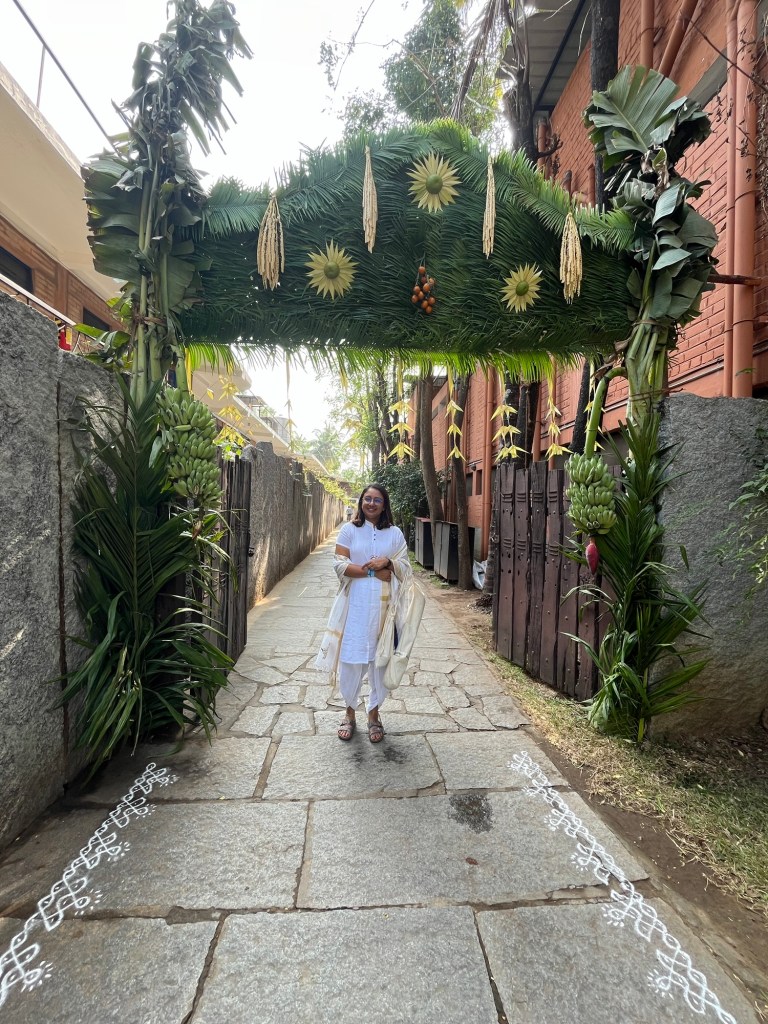
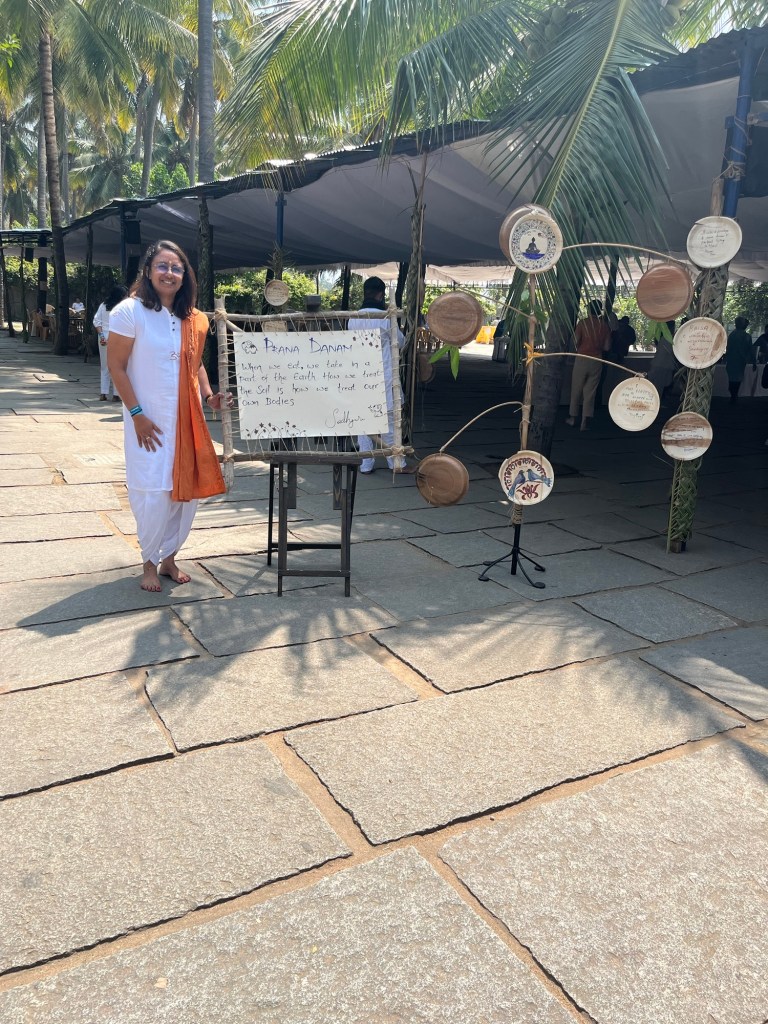
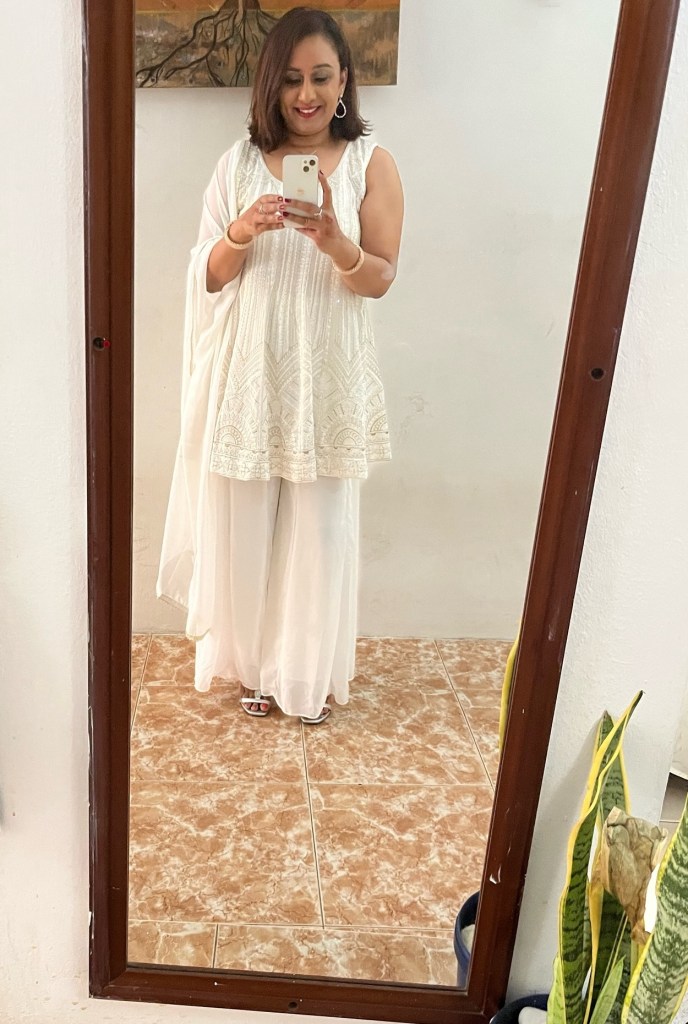
    We wore white clothes for the grace of yoga programme and an orange shawl  for Shivanga sadhana. 

    In the evenings we had Yaksha celebrations at the yoga center where we experienced Indian classical music, singing and dancing. 

    One evening we also had the opportunity to attend linga bhairavi abhishekam at night where the deity was smeared lovingly with neem paste. We learnt a devotional song during one of our sessions which we sang after the prayer was over, making the night vibrant and blessed.

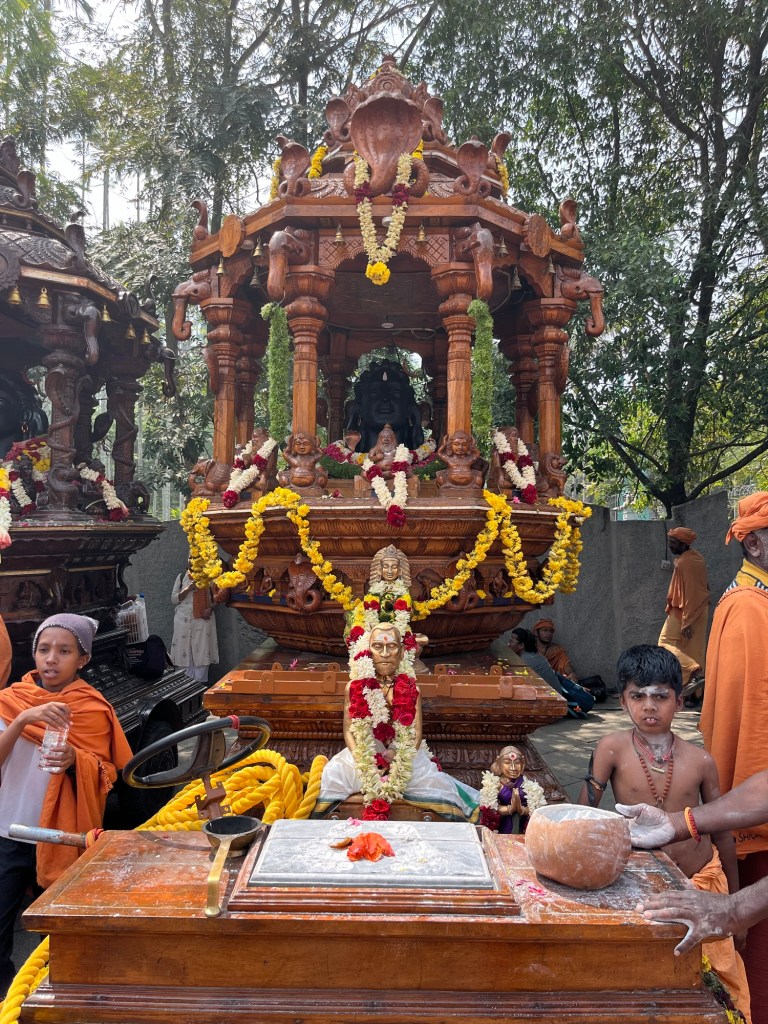
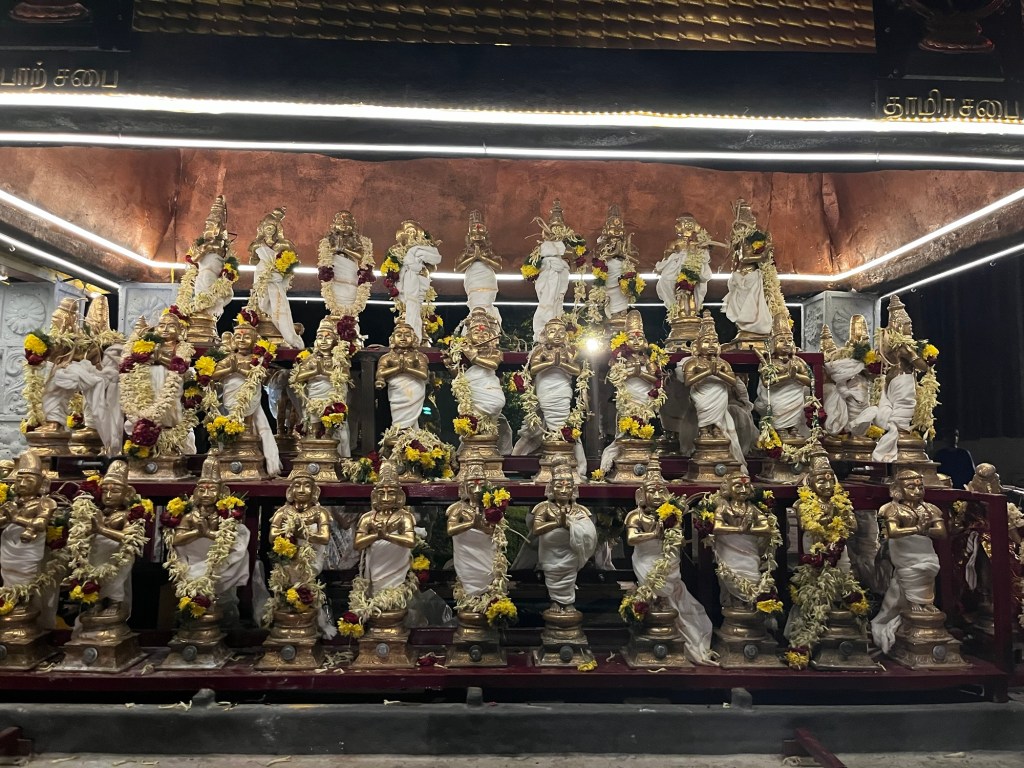
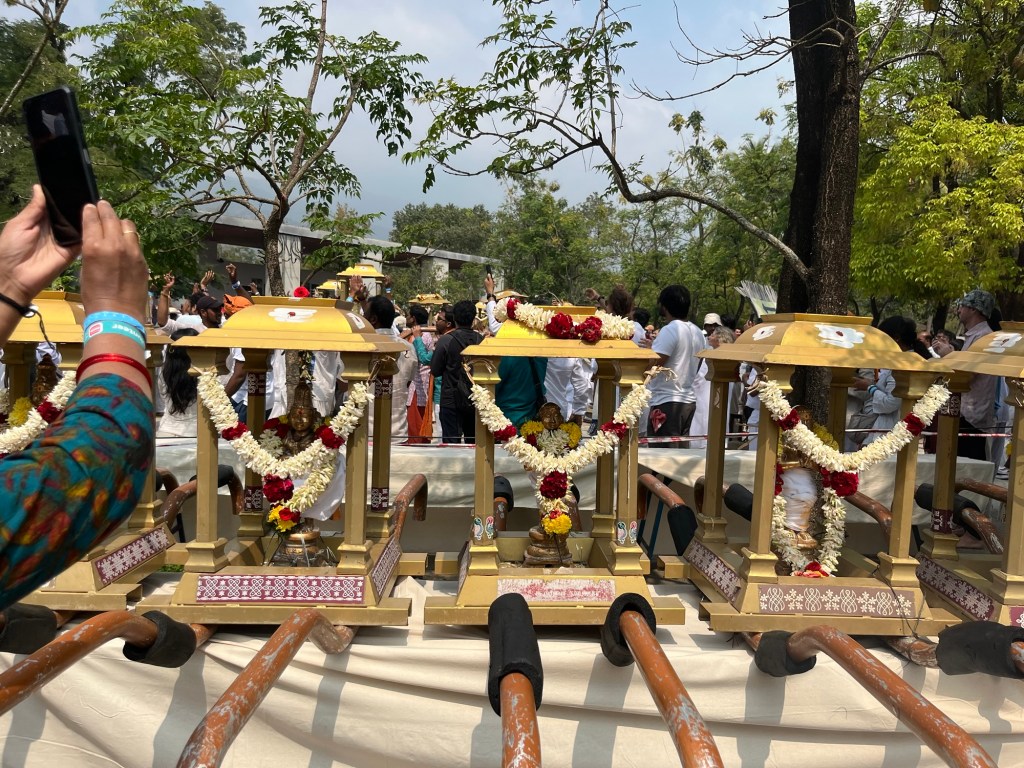
    One highlight was seeing the Pada yatra (Shiva yatra/pilgrimage), where people walk from across different regions of south India and come to the yoga center with their Adiyogi ratham ( a chariot with Adiyogi) and the 63 nayanmars ( Tamil saints devoted to Shiva). This was an occasion of great celebrations at the yoga center with singing and sounds of drums.

    The nayanmars
    Adiyogi ratham procession

    The food during these days was simple vegetarian meals served with much love by the volunteers. I thoroughly enjoyed the fresh fruits, specially the yummy watermelons!

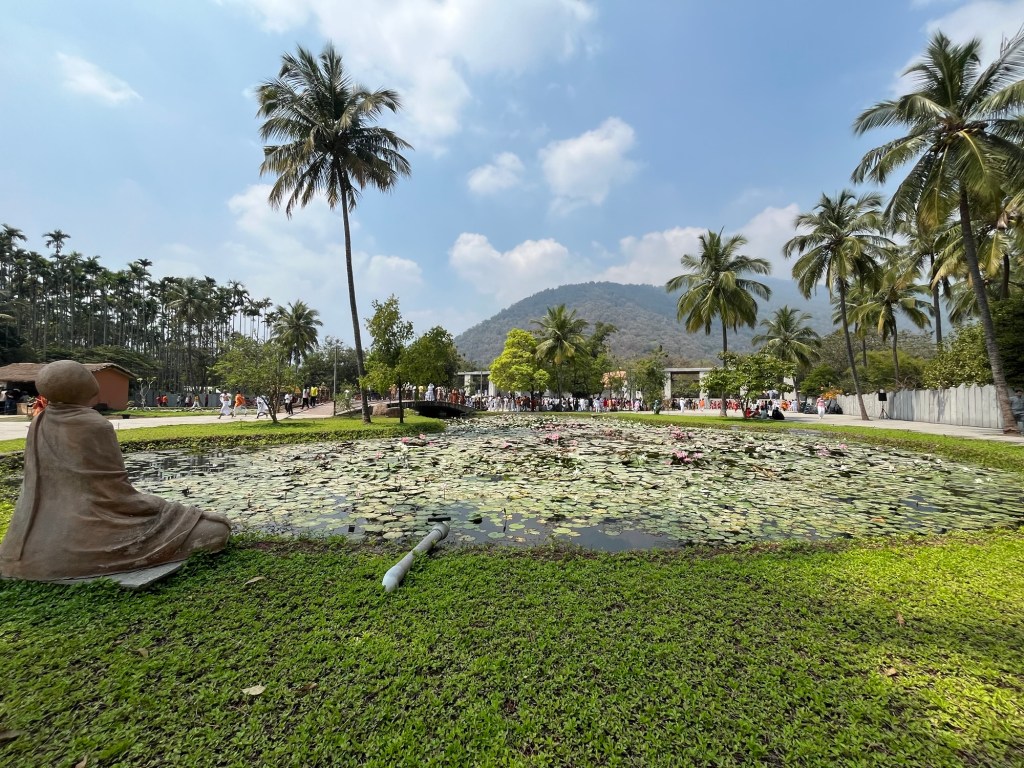
    Some changes cannot be seen from outside, they come from inside… when the soul is happy you experience a state of bliss by just sitting; like nandi sitting and utterly devoted to Shiva.

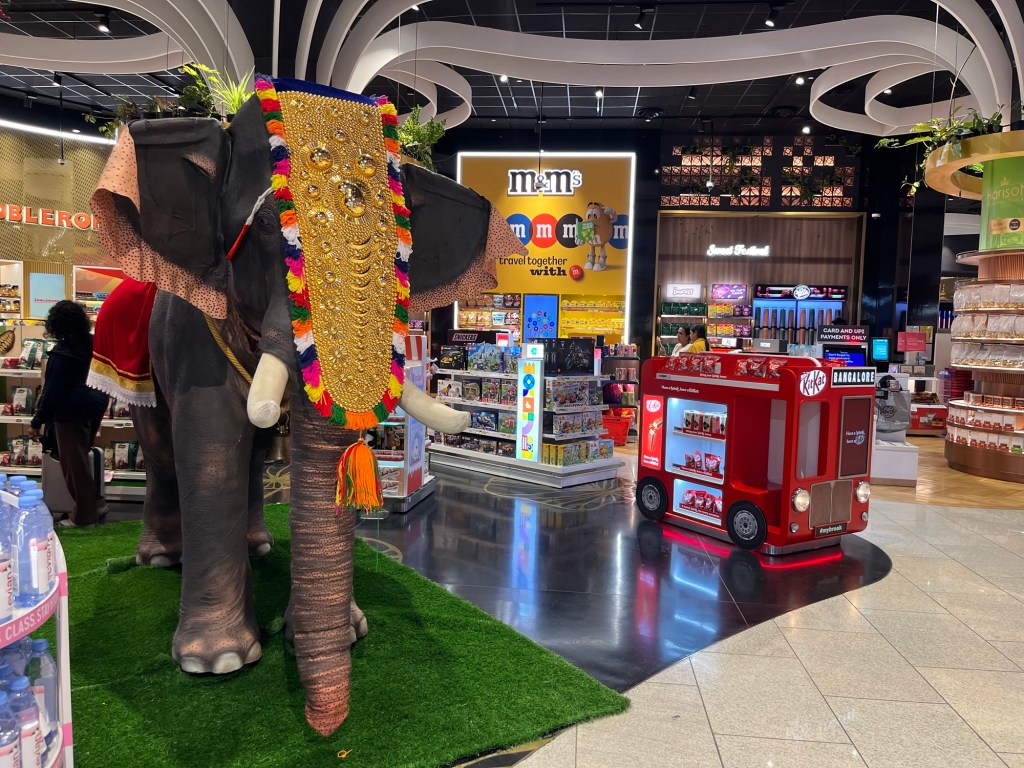
  • I travelled by Indigo airline this time, with a first stop at Bangalore airport where I had to take a second plane to Coimbatore airport.

    My last trip to India was by Air Mauritius with stop overs in New Delhi and Mumbai. These two cities are another 6 hours trip to Coimbatore compared to Bangalore which is 1 hour flight only. If you do not mind having no full meals and no screen, then flying by Indigo airline is fine.

    Bangalore airport is huge too and I had to take the internal transfer bus to change terminal. 

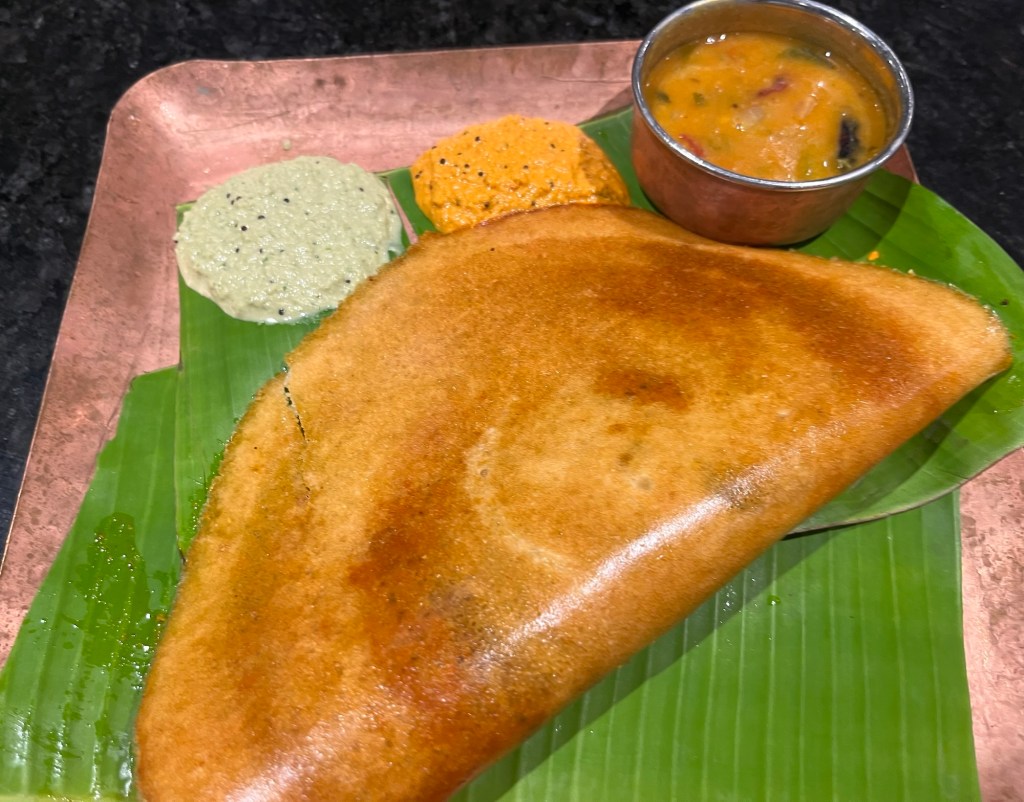
    I was quite hungry and got tempted by a dosa at Rameshwaram café at the airport. The place is full but manned by courteous staff. I had a waiter bringing me tissue paper and spoons😂

    The ghee masala dosa was yum and so heart warming and I ended my dinner with a masala chai latte.

  • My first trip to Isha Yoga Center in Coimbatore was in March 2024, nearly 2 years ago. I had enrolled for a wellness programme called “ayur sampoorna” and also celebrated my 40th birthday there. A quiet birthday which fell on “Ekadashi” day, a special day observed by yogis where it is best not to eat or rather have light meals. I drank only coconut water on that day and had my main meal in the evening. 

    I had spent the day visiting the consecrated places at Isha Yoga Centre and watched the Adiyogi divya darshanam ( display of lights on Adiyogi statue) with my two Mauritian friends who live at the ashram.

    On my birthday in 2024

    I loved the ashram vibes and was impressed about how organised and clean it was.

    Since year 2020, I have been watching the Mahashivratree festival online from 6pm to 6 am… dreaming of attending it one day.

    For several reasons I had postponed the trip because I was not physically and mentally prepared for it. Since 2019, I have been practicing yoga taught by Isha Yoga Center; where you need self discipline to practice it by yourself after attending the classes.

    I have been practicing before this trip, to be able to live the experience fully. What we call “Sadhana” in yogic vocabulary.

  • I have been quite silent lately; not very social and less social media buzz…

    Sometimes we need a bit of solitude, by ourselves, watching our thoughts.

    Today, I am taking the plane to go to Adiyogi in Coimbatore. A long cherished desire becoming true: To be in Coimbatore for the grand  Mahashivratree festival at Isha Yoga Center. 

    Stay tuned and travel this journey together with me on TreeLog🙏

    @ Bangalore airport
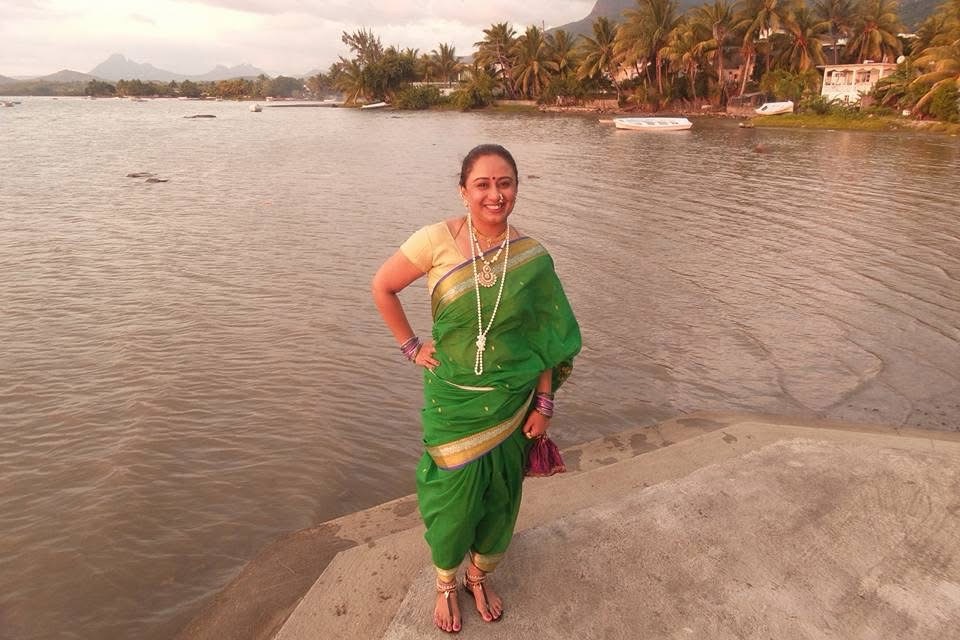
  • The “nauvari”… 9 yards of beautiful cloth draped in a majestic way creating the “ kashti” or “kashta”, the Maharashtrian  dhoti style saree. Nav means nine in Marathi, referring to the length of the saree.

    The “Nauvari” saree is a traditional Maharashtrian outfit which dates back to warrior times in India, where Maratha women went to war and rode horses. The traditional saree was therefore adapted for ease of movement and convenience. The great ladies such as Rani Laxmibhai who fought against the British , Ahilyabhai, Jijabhai, mother of Shivaji Maharaj all fought and led battles wearing their dothi style Maharashtrian saree.

    In Mauritius we commonly call this dhoti style of draping as “ kashti” . We wear this outfit during special occasions, weddings and festivals like Ganesh Chaturthi.

    My kashti in 2015 for the occasion of Ganesh Chaturthi
    Ganesh Chaturthi 2017

    Brides can also choose to wear the kashti as their wedding outfit, pairing it with beautiful jewellery and the manduvli ( pearl-like string tied around their forehead). 

    Screenshot from Better India page on Instagram

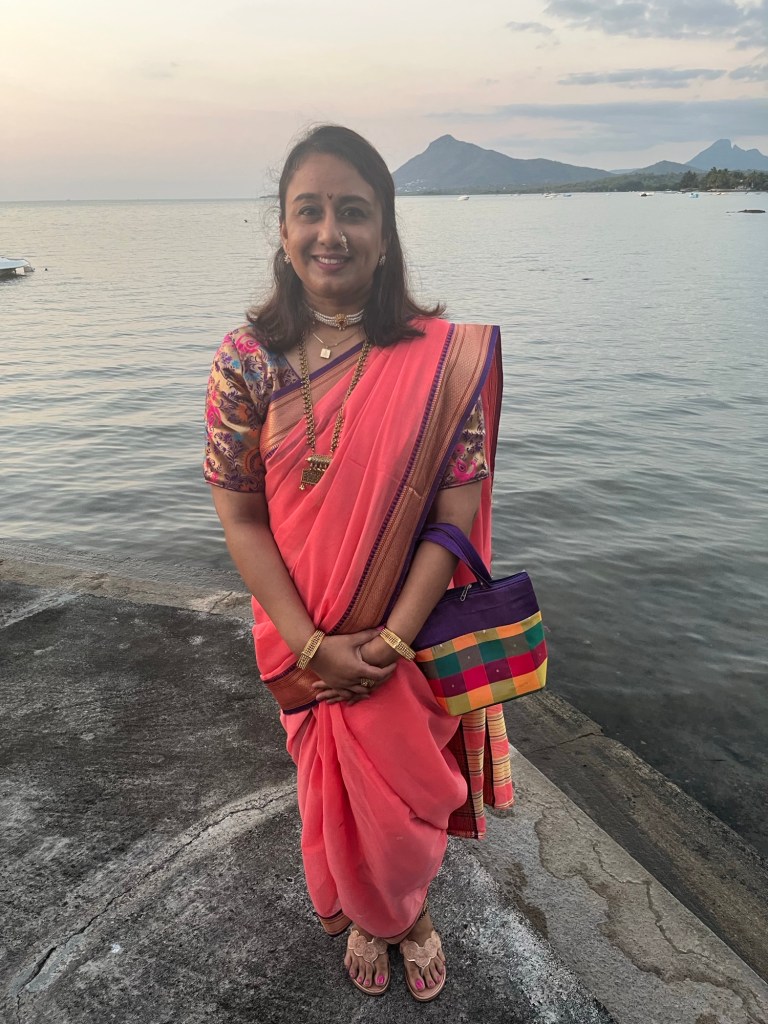
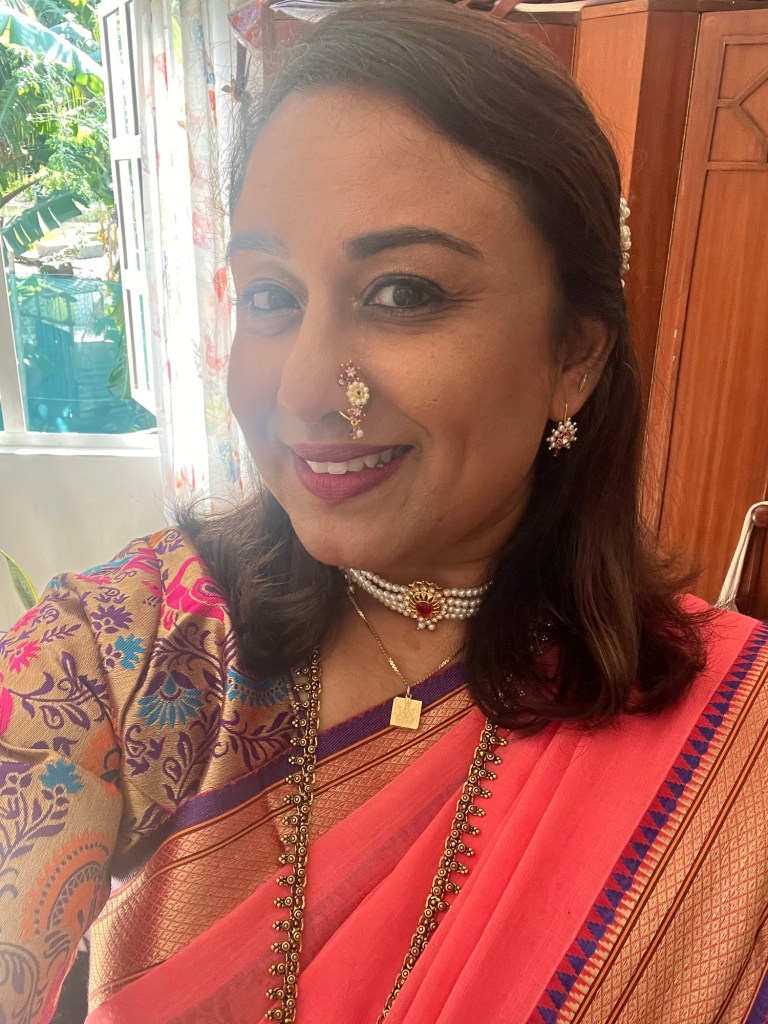
    Maharashtrian outfits are worn with jewellery such as the nath ( nose ring, kudhi studs, pear-like necklaces and the moon shape bindi ( tikka).

    The kashti can be of simple cotton worn during occasions like prayers or made from luxurious fabrics such as silk for weddings. The Paithani style is my favourite with peacocks designs, embroidery and silk fabric.

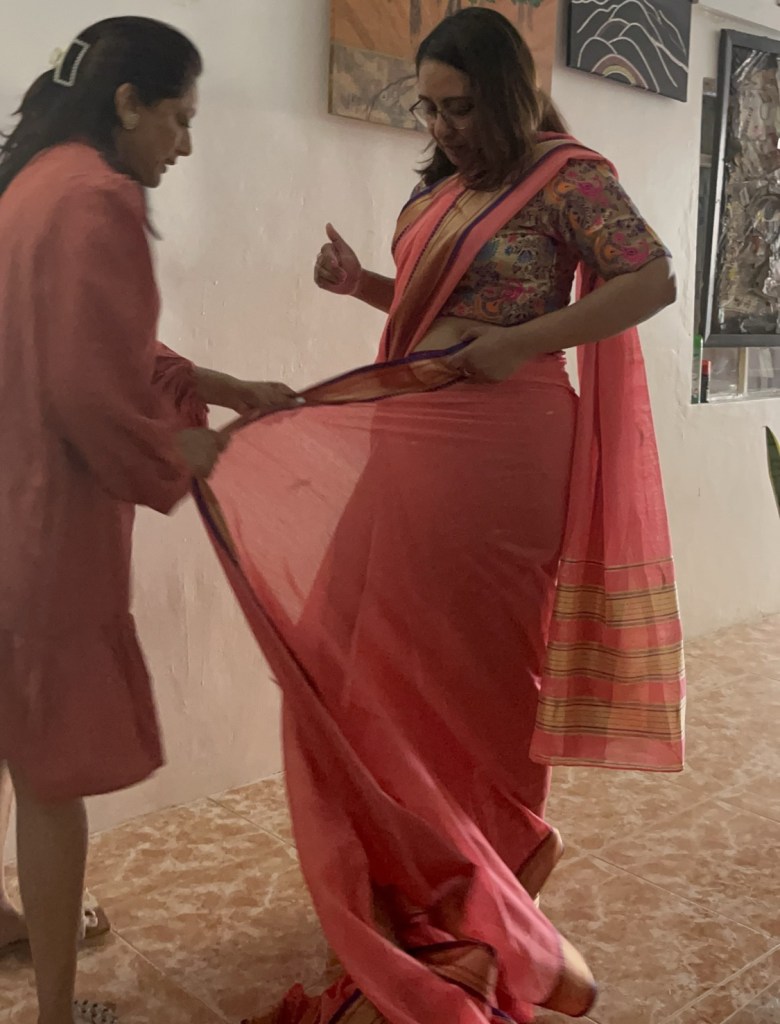
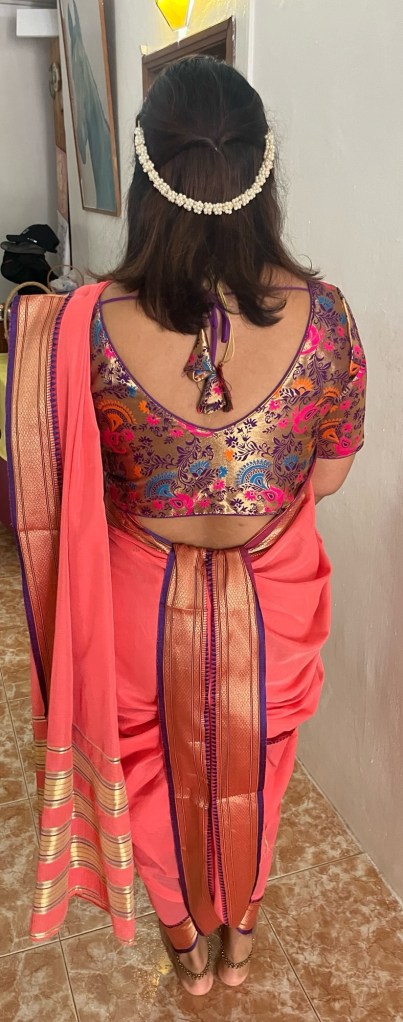
    I have worn the kashti for Ganesh Chaturthi festival this year after a very long time. My cousin did the draping for me, making the pleats and passing the fabric between the legs to make it look like a dhoti ( indian style pants). It is a form of art on its own! Unlike the saree, we wear the kashti with leggings underneath instead of petticoat.

    Kashti draping – 9 yards of cloth
    The finished look – feeling like Royalty😜

    It was fun to dress up, feeling the powerful energy of the Maharashtrian warrior ladies. I hope you enjoy this post and for lady readers, why not try wearing the Nauvari one day ( if you have not tried it yet!).

    A little catwalk😂

  • This weekend, I am paying tribute to my ancestors. Yesterday was All Saints day and I accompanied my dad to the cemetery with flowers for my grandparents and other  relatives. I had a little tour in the cemetery, listening to my dad talking about our relatives resting here – names and stories that form our family tree.

    Today is public holiday and we celebrate the arrival of indentured labourers in Mauritius. A day in honour of our ancestors who crossed the ocean from India to work in the sugar cane fields on this small island.

    In 1834, the British Government tried “ the great experiment” in Mauritius, which entailed replacing slaves by indentured labour. The word “indentured” is a form of labour bound by a contract for a number of years and can be without salary; both parties can also agree on a prepaid lump sum or form of compensation.

    About half a million indentured labourers came from India and landed at Apravasi Ghat in Mauritius, which became known as one of the greatest migration in history ( source: UNESCO website).

    My own ancestors came from the state of Maharashtra in India. They brought with them the culture, traditions and language which we are still using in Mauritius.

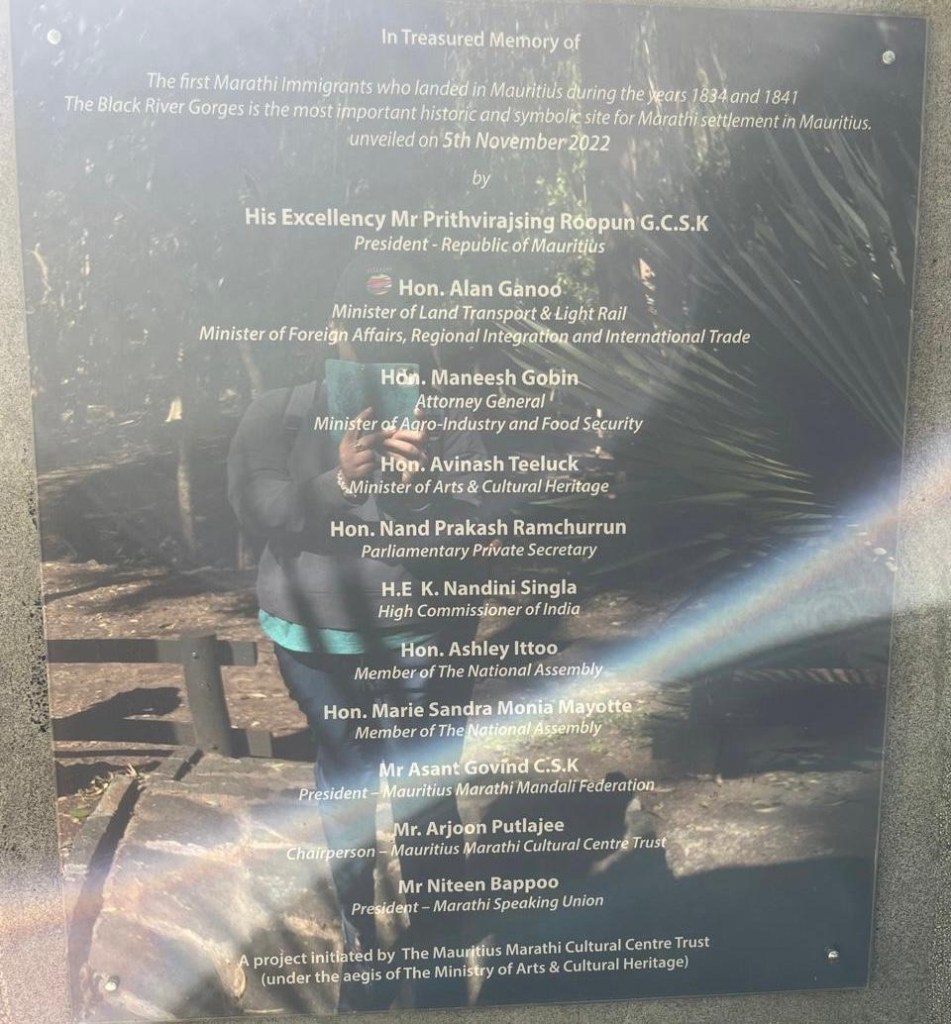
    Stele found in the Black River gorges to commemorate the settlement of the Marathi community in this area
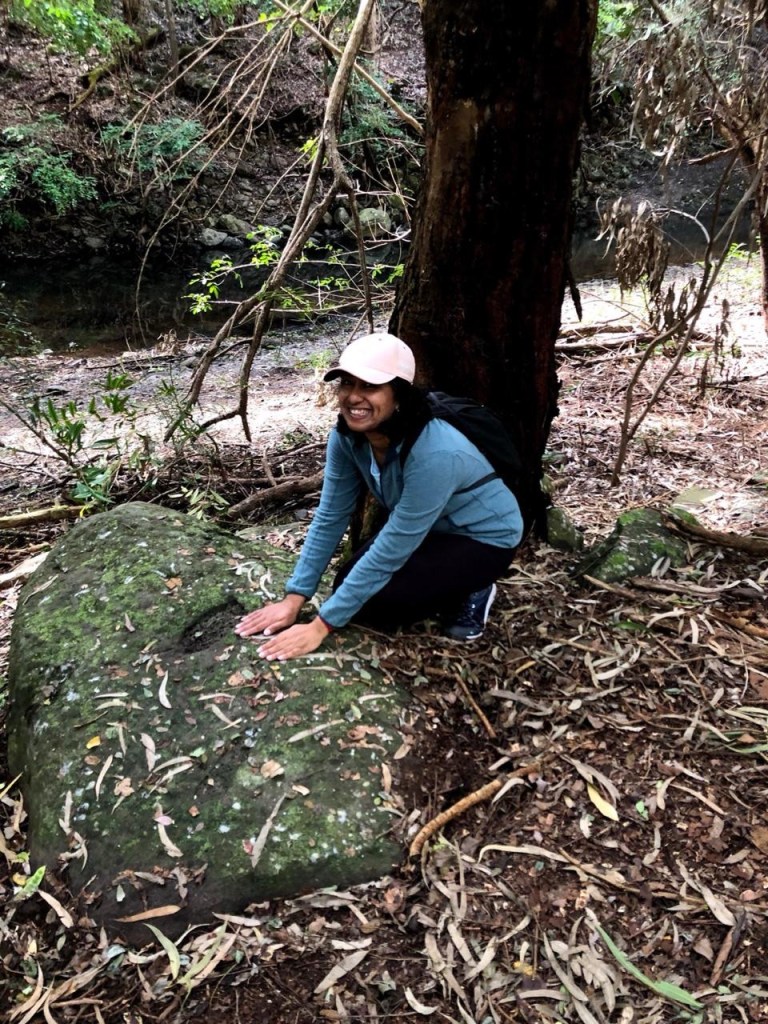
    Me, touching the ground where the ancestors dwelled

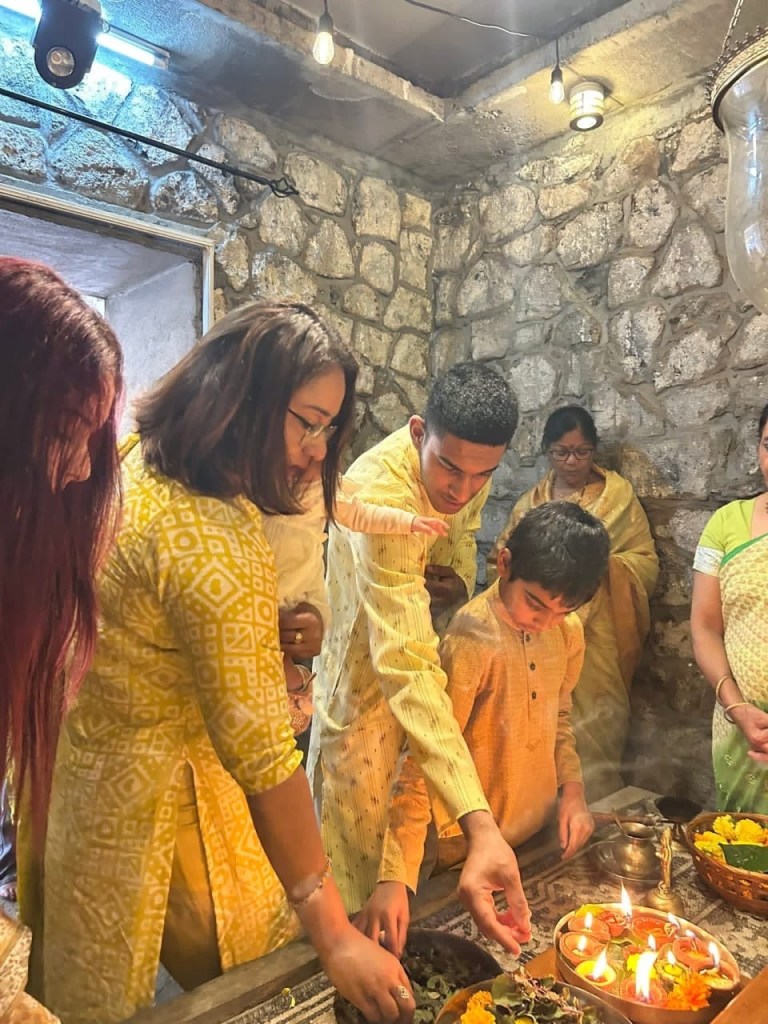
    This morning I visited the oldest Marathi temple in Mauritius – the Cascavelle Pandurang Kshetra Mandir built in 1902. The temple hosts Lord Vitthal, also known as Panduranga and today we celebrated Ekadashi, which is also called the day of Lord Vishnu. 

    The name Pandurang originates from Pandharpur, found in the state of Maharashtra and is known as a holy place for Lord Vishnu (called Vitthal or Pandurang). 

    Ekadashi prayer, offering tulsi leaves
    Lord Vitthal and his consort Rukmini in Cascavelle temple ( another form of Lord Vishnu and Lakshmi)

    I find this beautiful that we are still celebrating the devotion which was brought by our ancestors nearly 190 years ago.

    My close friends know how much I treasure cultural diversity and my post is to share my roots, which are part of who I am today.

  • I didn’t post on the blog lately because I was caught up in a whirlwind of celebrations!  A wedding celebration and Divali festival kept me on my toes during October.

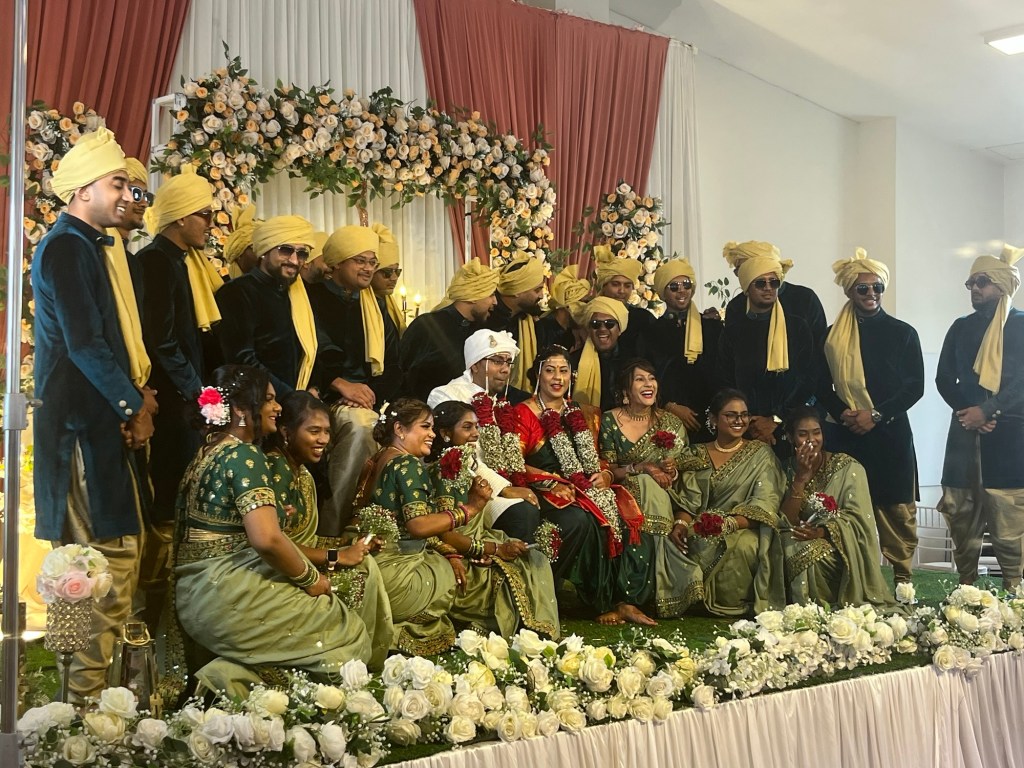
    My cousin got married two weeks ago and my brother’s wedding was in June this year. Two close weddings in a year demand a lot of outfits, accessories and of course dressing up! Both weddings were done the traditional Maharashtrian way, rich in rituals and tradition.

    My cousin’s wedding

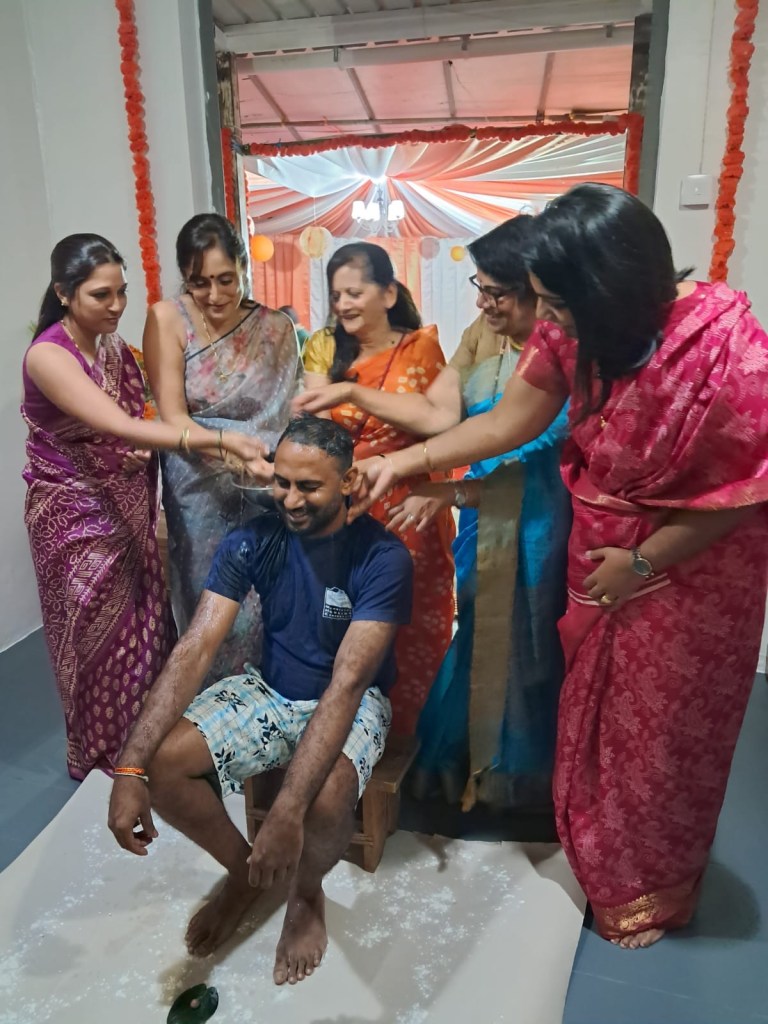
    It started with “Outna” on Friday. Outna is a ritual where the would be groom receives a bath with fresh coconut water which is believed to purify the groom. The same rituals are done if a girl is getting married too.

    My brother’s Outna ceremony

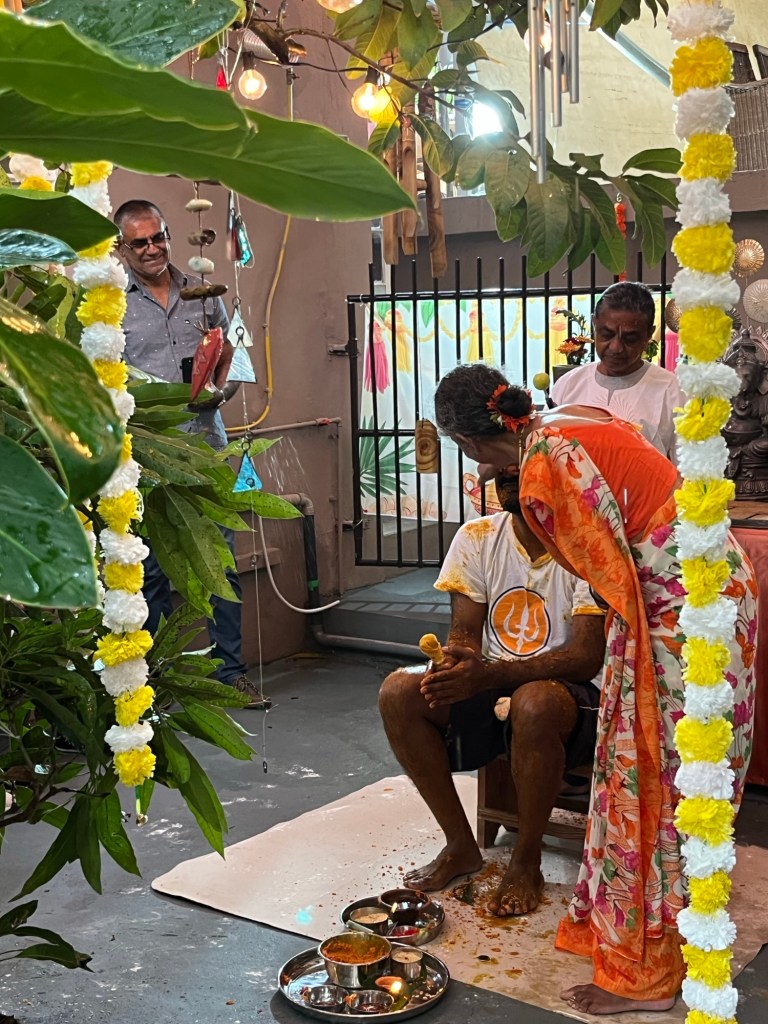
    The following day is the “Haldi” ceremony. Haldi means turmeric where a paste made from fresh turmeric is applied on the groom’s body for purification, protection and a beautiful glow for the wedding day.

    Haldi ceremony

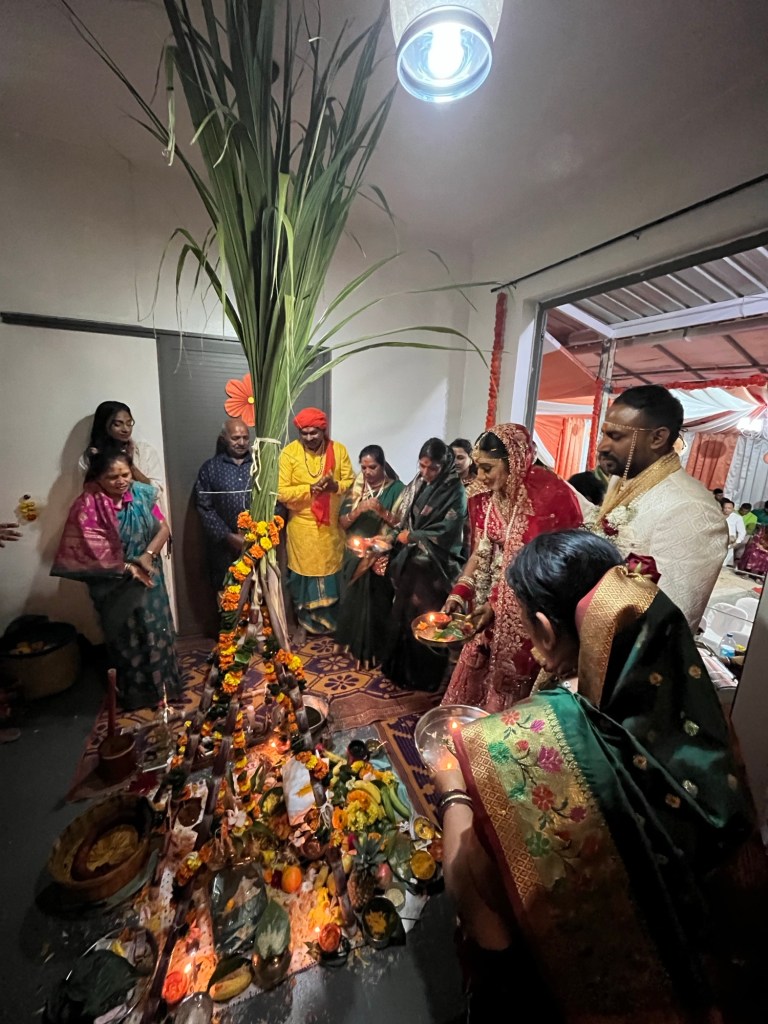
    After the turmeric ceremony, a prayer called Yajmanpan is held where rice is put in a basket and five ladies are called to crush the rice with a wooden pole. My role as the sister was to hold a lamp in a platter (above the pole) while the ladies are crushing the rice. It was quite a tedious task as my arms got tired holding the platter high up! The priest spoke in Marathi and asked the groom to check if the rice has been crushed properly. We all had a good laugh during this ritual.

    Yajmanpan

    Saturday nights are known for the traditional 7 curries and Ora ( a type of roti made with maize or ground rice). The night is often filled with live music, singing and dancing.

    Risk taken – white clothes to eat curries and Ora

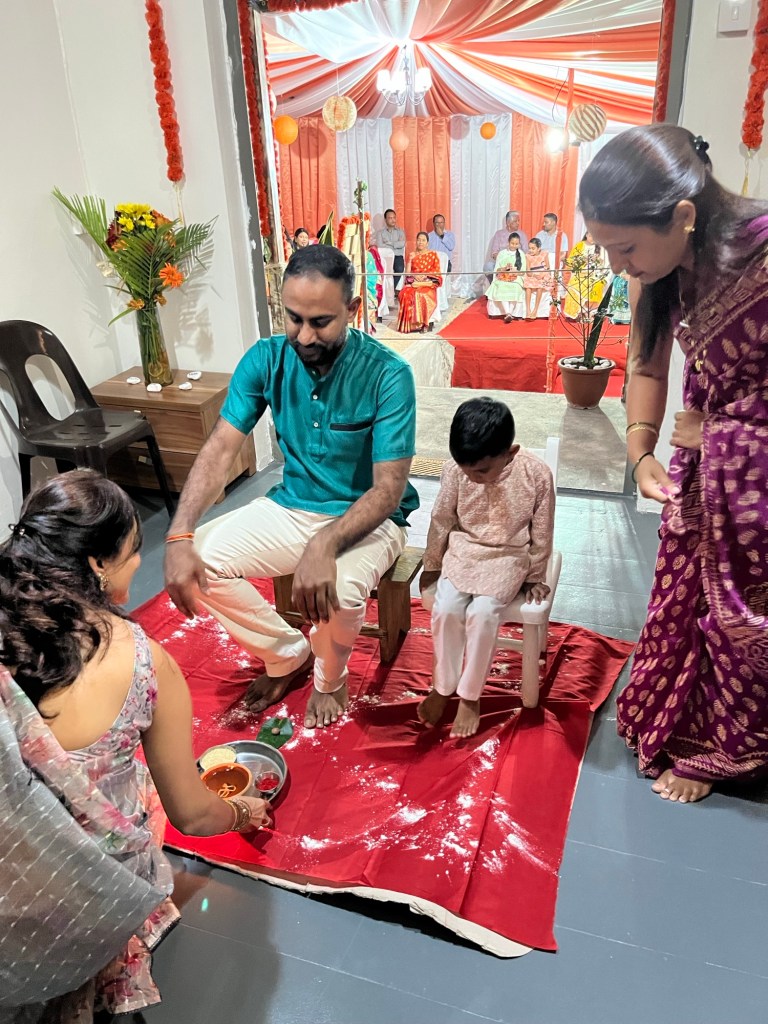
    The following day is the big wedding day. Sunday starts early morning with a ritual called “Sandoline” where the groom receives a cold water bath sitting under a wooden structure. This is a less known ritual as it is held too early and only the brave souls who wake up at dawn can assist this ceremony.

    The main wedding ceremony is where the bride and groom go around the fire. In mahahashtrian culture, the ceremony starts with a white piece of cloth separating the bride and groom and their families. Two uncles from each side of the family will hold the cloth high and one needs to pull it as the priest or priestess will say  “Shubha Mangala Savdhaan” which means “Be careful, and have an auspicious and fruitful marriage” .There are a lot of rituals involved on that day, including the vows, the “Kanyadhaan” meaning giving away of the bride, the exchange of wedding rings and the bride wearing the mangalsutra ( wedding chain).

    Bro and his bride after the wedding ceremony
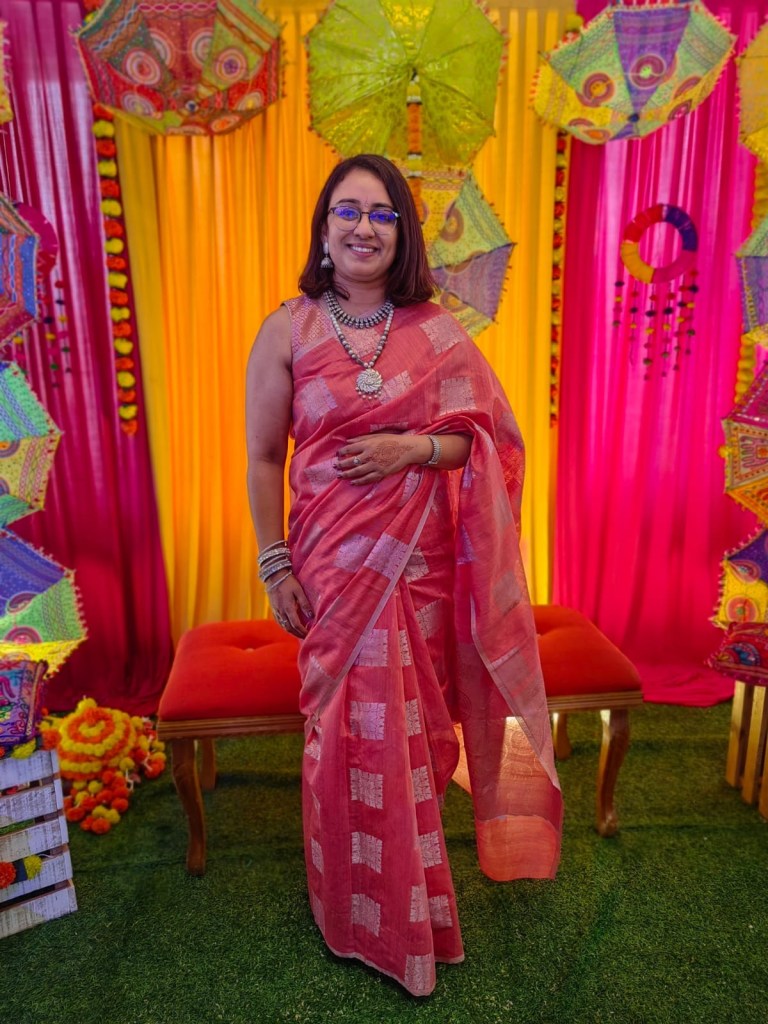
    My outfit for bro’s wedding ceremony

    In my family, a special prayer called “Gondhal” is performed when the eldest or youngest son of the family gets married. It is a long prayer with traditional musical instruments and songs dedicated to Aai Bhawani ( the goddess also known as Durga or Bhairavi). 

    Gondhal ceremony

    The wedding celebrations usually end with a feast; a reception ceremony where alcohol and non vegetarian food are served with music and dancing throughout the night. This is usually held on Sunday evenings or Mondays.

    The reception day – My family.
    Missing in the picture : my younger brother’s wife and their little daughter who was 2 months old in June.
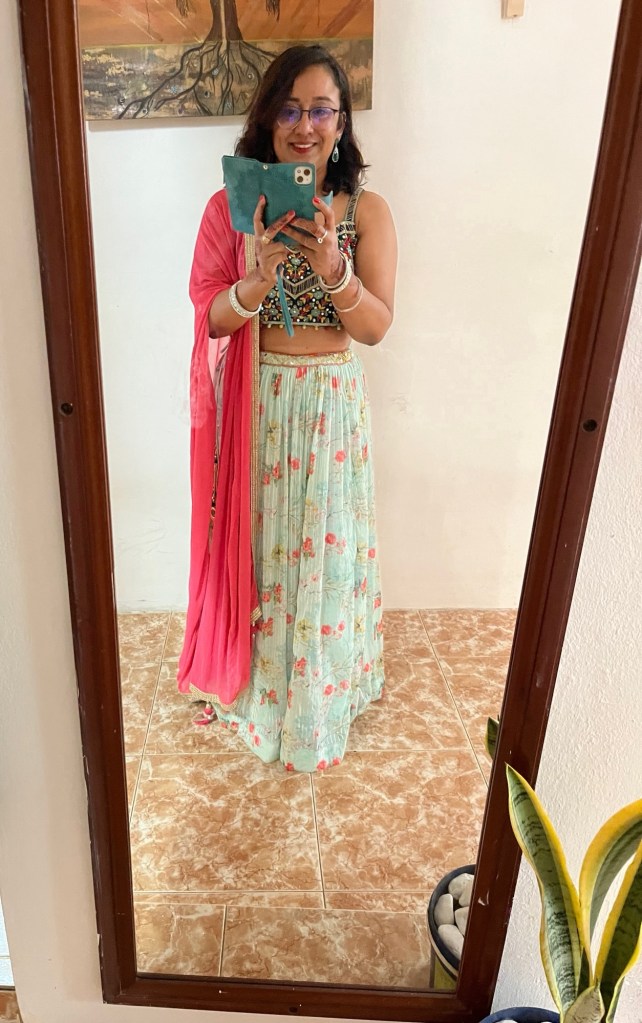
    My dress in autumn colours as per the theme

    To note that as time evolves, some families choose to adapt the wedding celebrations as per their schedule, budget and convenience. Some weddings can be held during weekdays or a one-day wedding. We, Mauritians also like to mix other cultures and traditions such as for example holding a mehendi night on Fridays.

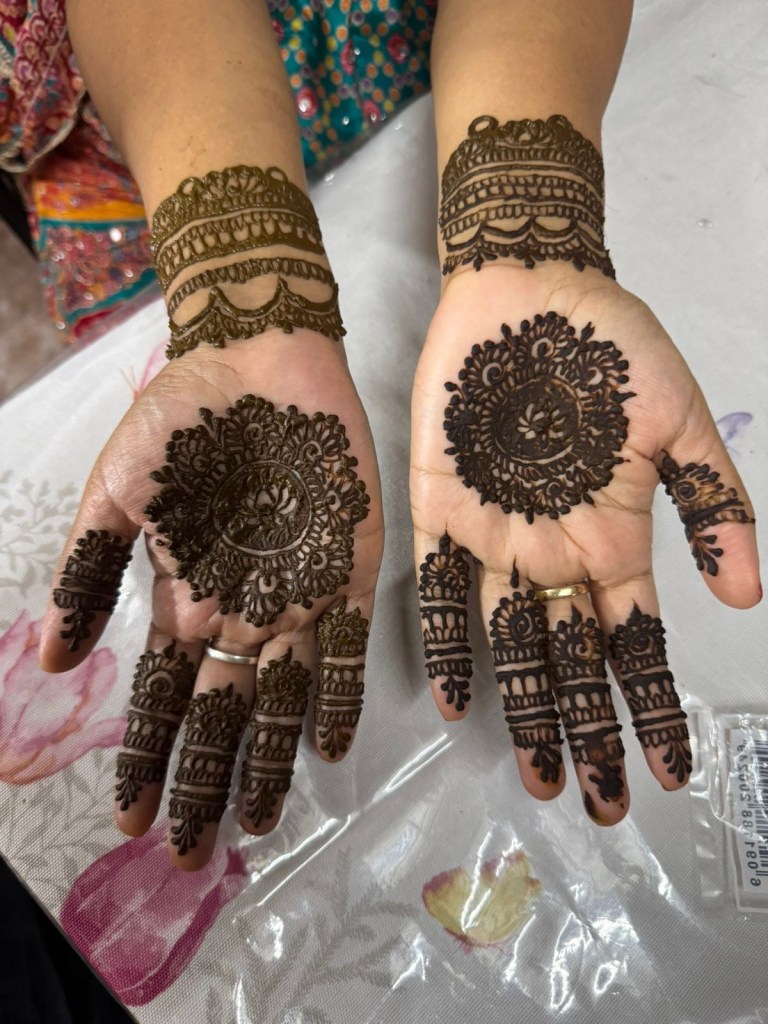
    I love wearing mehendi for weddings!

    In my humble opinion, to get married or not is a personal choice which should not be determined by society or family pressure. It should come from love and a willingness to share our life with another person.

    And well… I’ve been told lately that I attend everyone’s wedding…except my own 😂

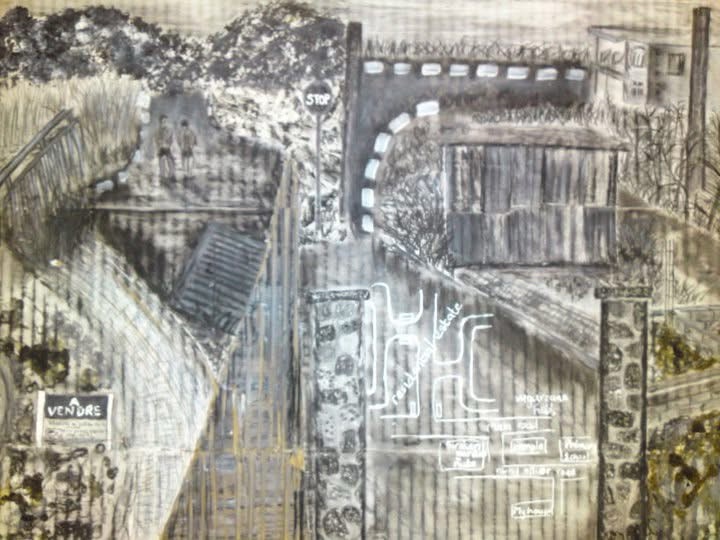
  • Back in 2004 when I was doing my undergraduate degree, I had a few art modules which encouraged us to observe our surroundings. One reality that struck through was the amount of waste that we were generating… the plastic bottles, packaging, aluminum cans, clothes etc. We throw them away without realising the impact of our actions on the environment.

    Pollution: we hear this word often but do we realise how our actions are contributing everyday to pollution and affecting the environment?

    Where does these waste go? How long do they take to decay? Can we reuse them to reduce pollution?

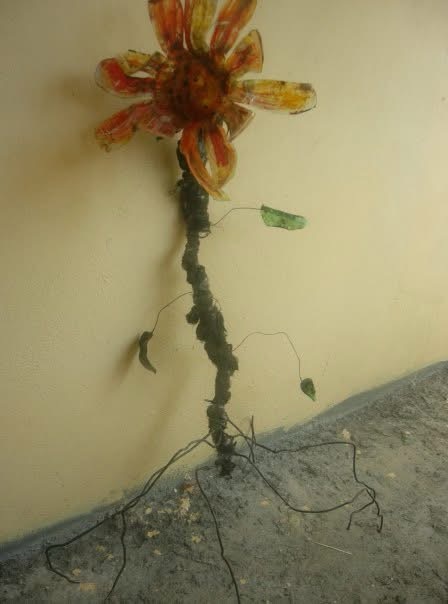
    I started collecting waste for my art projects. I collected plastic bottles from the hotel nearby, the packaging of chocolates that I eat, newspapers… I used them for my artworks, 21 years ago when it was still avant-gardist to use waste products in art. 

    In our current time 2025, I see a rise in consciousness. Hotels for example are no longer giving their clients plastic water bottles. Some hotels are bottling their own reusable water bottles and others are using bottles made from biodegradable material. These are positive actions but there is still a long way to go, starting with the basics like providing recycling bins to all the households in Mauritius.

    In this Anthropocene era, it is important that we, human beings become conscious of our daily actions and how they can impact our planet… positively or negatively.

    What do you do to minimize your impact on the environment?

    P.S: All these artworks below were made during my undergraduate studies.

    Observing my surroundings and drawing it (material used : piece of carton)

    Pollution in the sea – use of newspapers and magazine cuttings and the artwork below was made by reusing waste.
    My sculpture – raft made from plastic bottles, floating in the sea
    Sunflower made from plastic bottles
    Video made for an animation module. Theme: Pollution.
  • These huge giants gracing the sky… 

    Mountains, which have emerged due to volcanic activity millions of years ago. 

    They stand huge and majestic. I find mountains beautiful. Tall and strong, mountains send a message to stay grounded, unmovable and unfazed by what is happening around us. Resilience at its best. 

    We can have a stand alone mountain, mountain ranges which are a series of mountains in one line or hills which are small mounts, all of volcanic origins.

    Mountains are very useful to the ecosystem, they act as “ water towers” and help to capture water which flows into rivers and provide us with freshwater for survival.

    They are also a symbol of achievement; enjoying that magnificent view after a strenuous climb. Feeling on top of the world when reaching the peak.

    Mountains are also considered as mystic places in different cultures, where people go to seek spiritual experiences. It is believed that god resides up in the mountains, like in Hinduism, Mount Kailash in the Himalayas is known as the abode of Lord Shiva. Himalaya is a Sanskrit word meaning “abode of snow”.

    The Mauritian author Malcom de Chazal wrote about mountains in his book “Petrusmok”, where his imagination turned mountains into giants.

    Personally, I love mountains. I used to observe mountains while traveling by bus when I was younger and finding forms and shapes in their relief. 

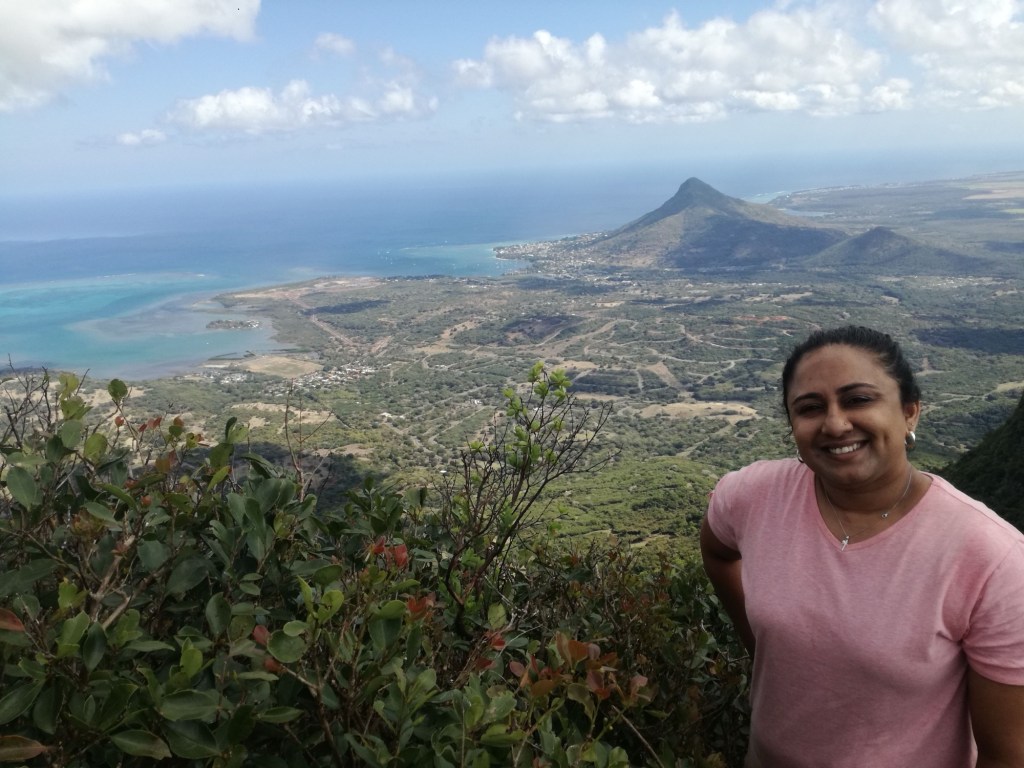
    My favourite mountain is Le Morne Brabant mountain, a UNESCO World Heritage Site which is rich in history and also has the best view on the island. I have climbed Le Morne Brabant, Mont Lion near Mahebourg, Piton Canot in Chamarel and Piton de la Petite Rivière Noire, the highest peak of Mauritius. As a child who grew up with chronic asthma and did not do any sports, climbing a mountain and reaching the top gave me a great sense of achievement. 

    Le Morne Brabant view from the sea
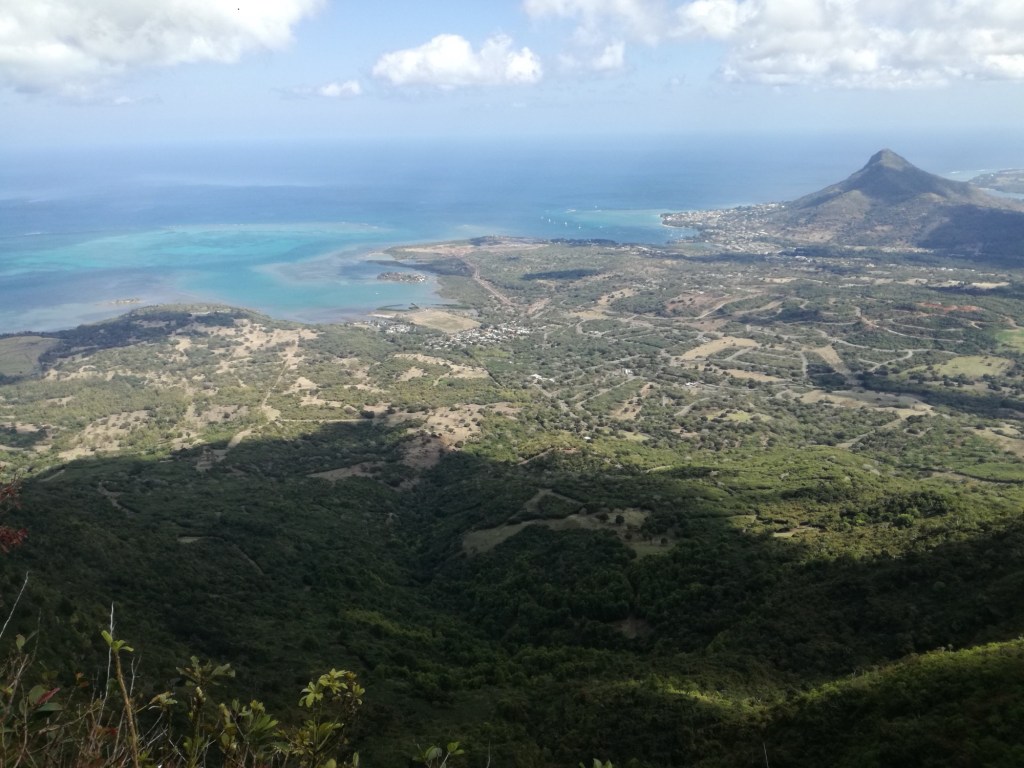
    View from highest peak of Mauritius – Piton de la Petite Rivière Noire
    View from Piton Canot in Chamarel – Black River mountain range

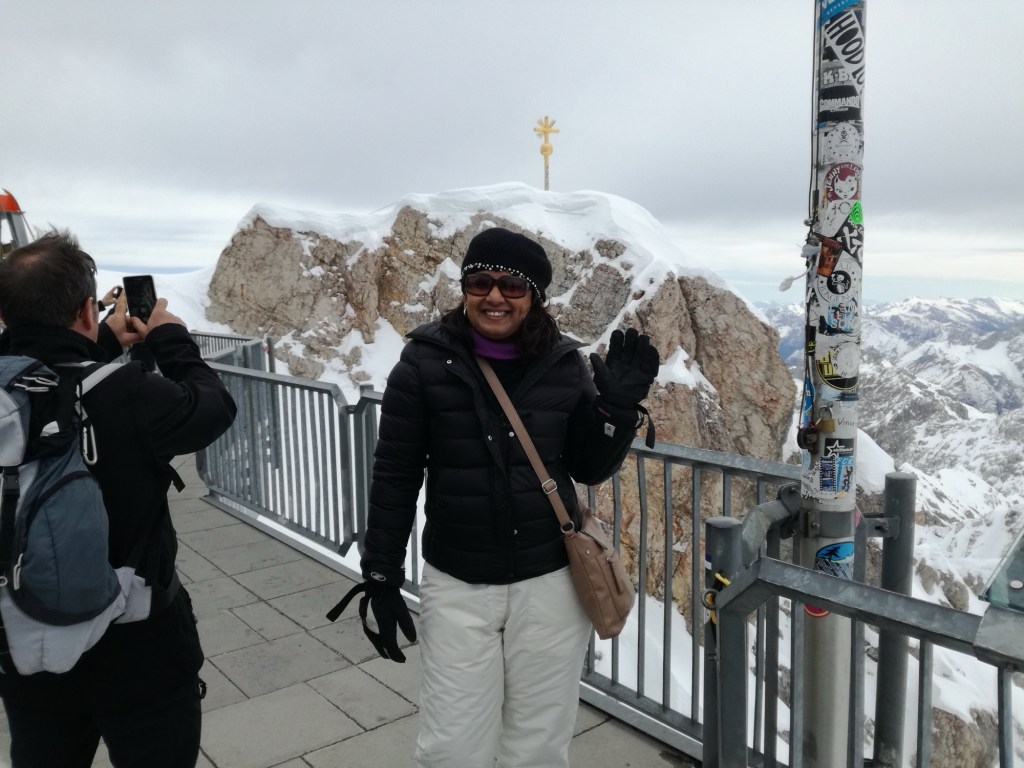
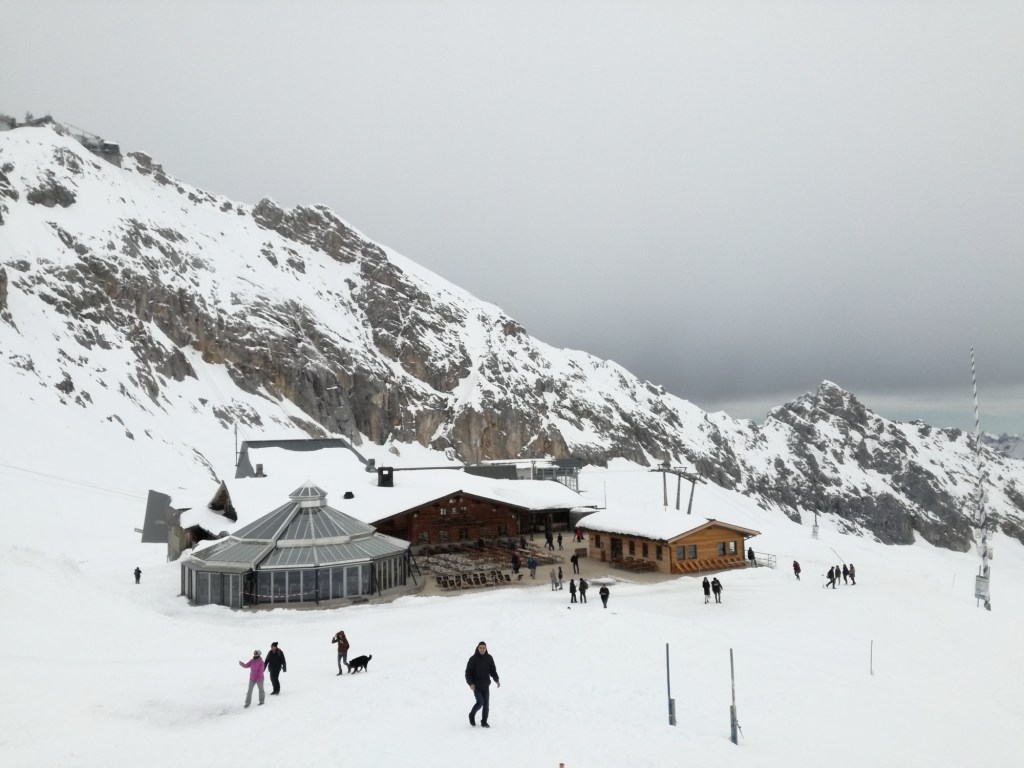
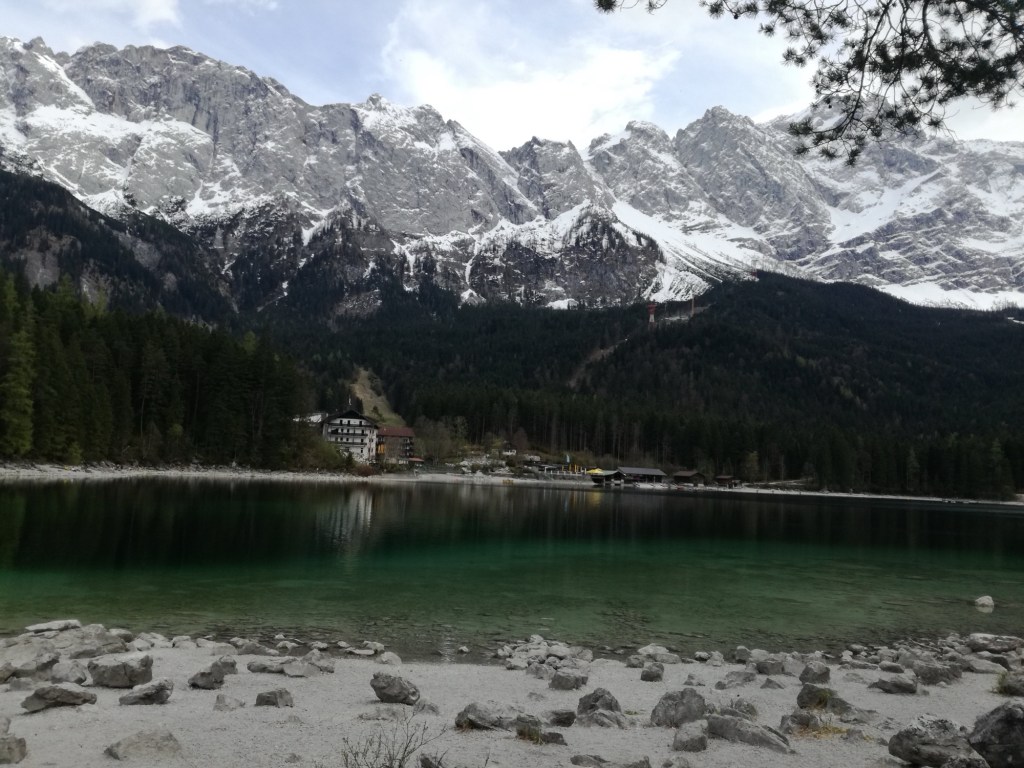
    In 2017 I was in Munich and went on top Zugspitze mountain, the highest peak in Germany where I saw snow for the first time in my life. What an amazing experience it was to travel by train and cable car to visit a mountain and enjoy a delicious onion soup. 

    Up on Zugspitze-Highest peak in Germany
    Snow up on Zugspitze

    Did you know that mountains can grow? Due to the ongoing tectonic activities Mount Everest for example is growing by a few millimeters every year. 

    Have you ever climbed a mountain? Which one is your favourite? 

    I would love to visit the Himalayas one day. Aspiring Edmund Hillarys, share your thoughts!

    Black River mountain range – view from Piton de la Petite Rivière Noire, highest peak of Mauritius – 828m above sea level